Three years for a degree.
Or three months to learn a specific skill.
When you put it like that, the shorter option can sound tempting.
Why spend years studying when you can complete a course in data analytics, digital marketing, AI or finance and start using the skill much sooner?
But that creates a misleading choice.
A micro-credential and a degree are designed to do different jobs.
The question isn't which one is better.
It's what you need it to do for you.
What Is a Micro-Credential?
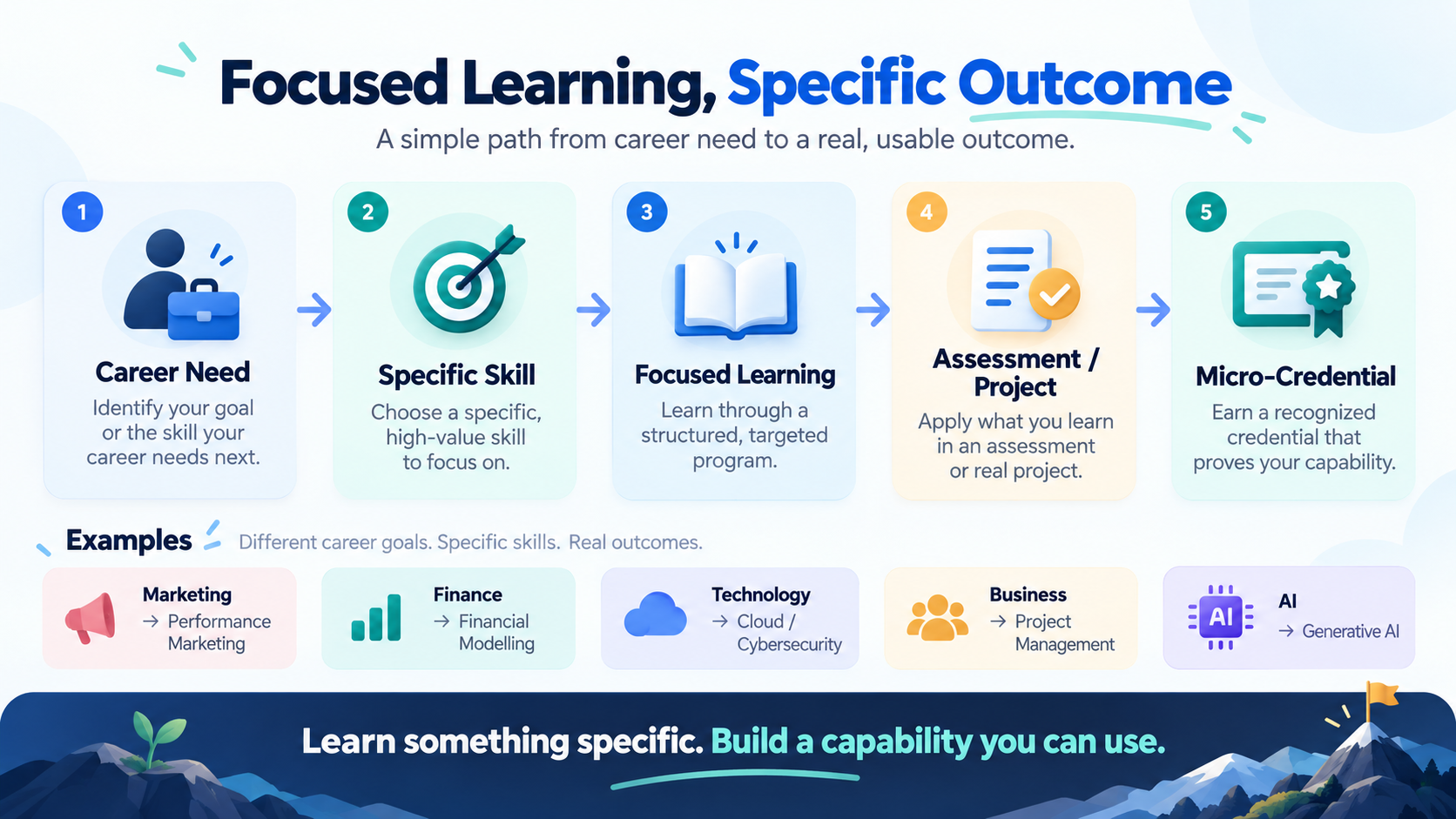
A micro-credential is a focused learning credential designed around a relatively small amount of learning.
UNESCO describes micro-credentials as records of focused learning achievements that verify what someone knows, understands or can do, usually against defined standards.
In simpler terms:
You learn something specific and receive evidence that you have learnt it.
That might include:
- Data visualisation
- Performance marketing
- Financial modelling
- Generative AI
- Cybersecurity
- Project management
- A particular software platform
Instead of studying an entire discipline, you're focusing on a smaller set of capabilities.
That's what makes micro-credentials attractive.
They're usually more targeted and can help learners update their skills without committing to another full degree.
Need a Specific Skill Rather Than Another Full Degree?
Explore focused executive and certificate programmes designed around specialised career capabilities.
Explore Short-Term & Executive ProgrammesWhat Does a Full Degree Give You?
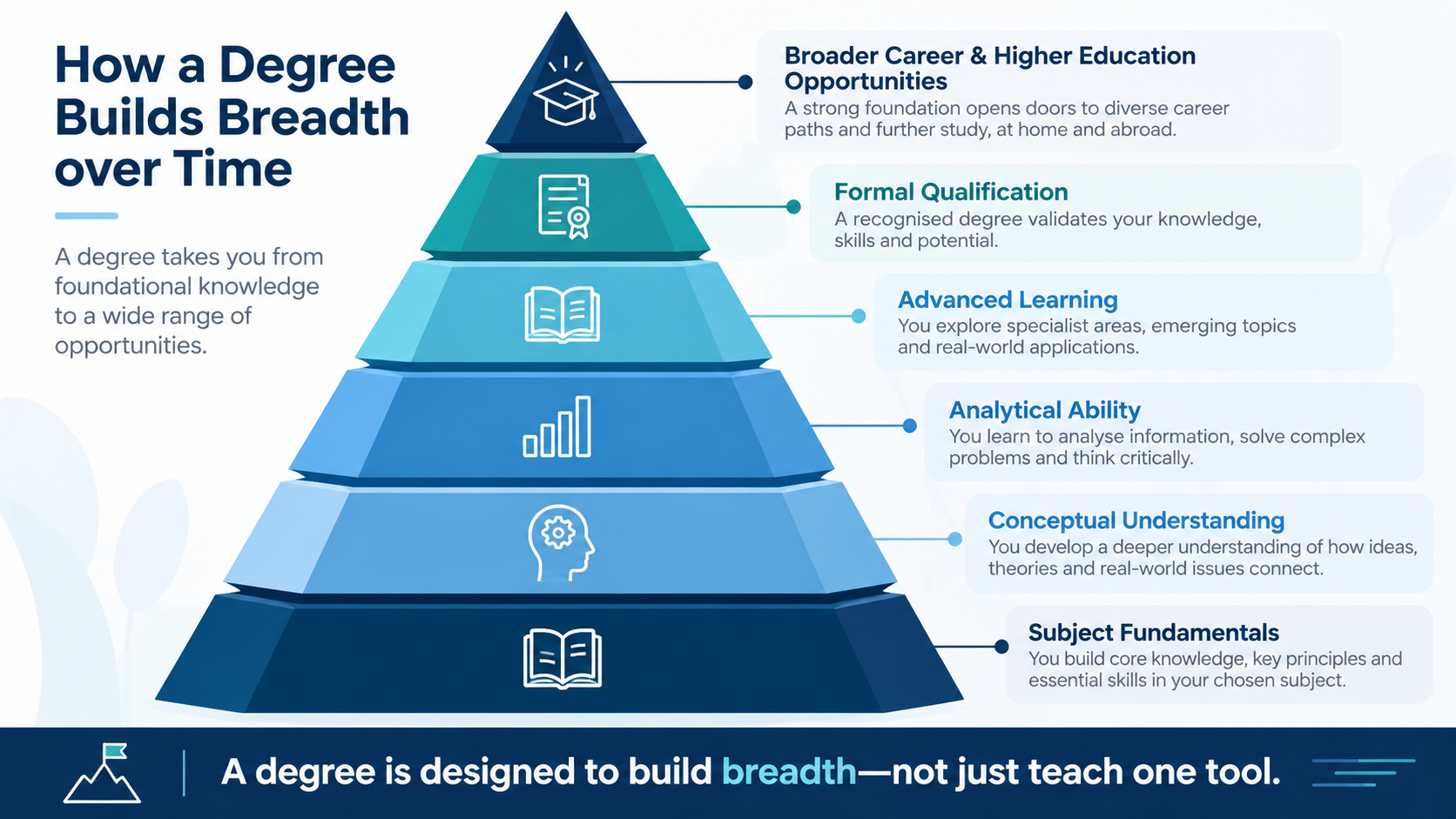
A degree is broader.
You're not only learning one tool or one skill.
A good degree should help you build subject knowledge, understand concepts, develop analytical ability and progress through increasingly advanced learning.
It also gives you a formal academic qualification.
That matters because many jobs, postgraduate programmes and professional pathways still specify a bachelor's or master's degree as an eligibility requirement.
So if you're finishing Class 12 and asking:
“Can I replace my bachelor's degree with a three-month certificate?”
For most traditional graduate career paths, that's probably the wrong comparison.
The certificate can strengthen your profile.
It doesn't automatically serve the same purpose as the degree.
When Does a Micro-Credential Make More Sense?
Micro-credentials become especially useful when you already know what capability you need.
Suppose you're a B.Com student who wants to strengthen your financial analysis skills.
A focused course in financial modelling could make sense.
You're working in marketing and your team has started using AI tools.
A short AI or automation programme could help you catch up quickly.
You're a software developer who needs cloud skills for your next role.
You may not need another three-year degree.
You need a specific addition to your existing capabilities.
That's one reason micro-credentials have attracted interest for upskilling and reskilling. OECD research highlights their potential for focused skill development, professional advancement and continuing learning.
But Don't Collect Credentials for the Sake of Collecting Them
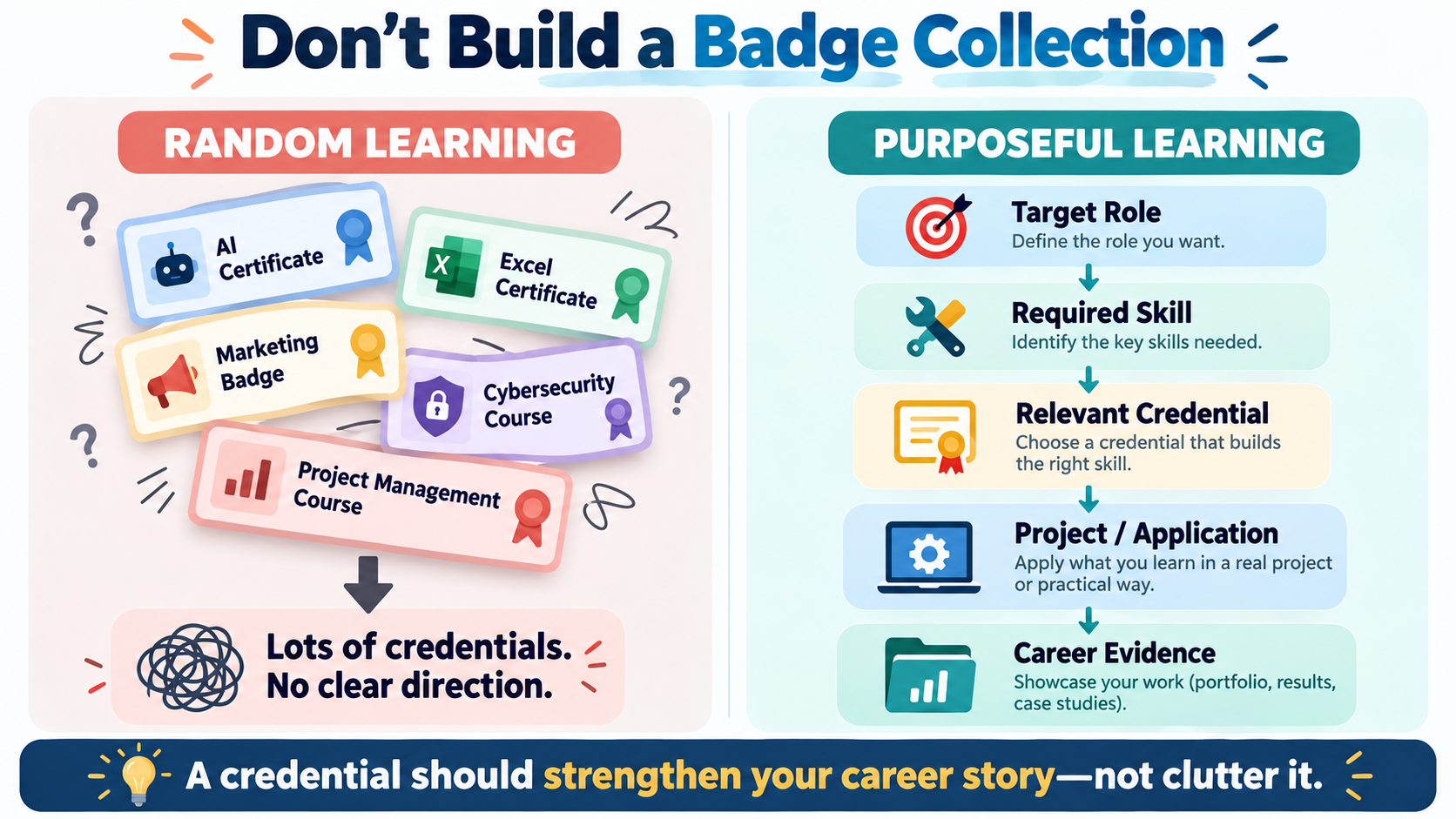
This is where things can go wrong.
One certificate in AI.
Another in Excel.
Two in digital marketing.
A project management badge.
A cybersecurity course.
Suddenly your LinkedIn profile is full of credentials—but there is no clear career story.
Before enrolling, ask:
Why am I learning this?
What role requires it?
Will I actually use it?
Does the course include meaningful assessment or projects?
Is the provider credible?
Can I explain what I learnt afterwards?
A shorter course isn't automatically useful just because it is shorter.
A credential should represent capability, not simply attendance.
Don’t Start With the Course. Start With the Career Goal.
Choose learning based on the capabilities your next role actually requires.
Find the Right Learning PathSkills Are Becoming More Important—but Degrees Haven't Disappeared
LinkedIn's 2026 Skills on the Rise research says employers are increasingly looking beyond degrees, titles and traditional career paths to understand what candidates can actually do.
That's good news for learners building specific capabilities.
But “skills matter more” doesn't mean “qualifications no longer matter.”
A better way to think about your profile is:
Degree = foundation
Micro-credential = specialisation
Project or work experience = proof
They can complement each other.
When Should You Choose a Degree?
A full degree generally makes more sense when:
- You need an undergraduate qualification
- Your target career expects a degree
- You want broader subject knowledge
- You may pursue postgraduate education later
- You're still building the foundation of your career
A micro-credential may make more sense when:
- You already have a foundation
- You need one specific capability
- Your job is changing
- You want to explore a new field before committing further
- You need to update your skills relatively quickly
The Smartest Choice May Be Both
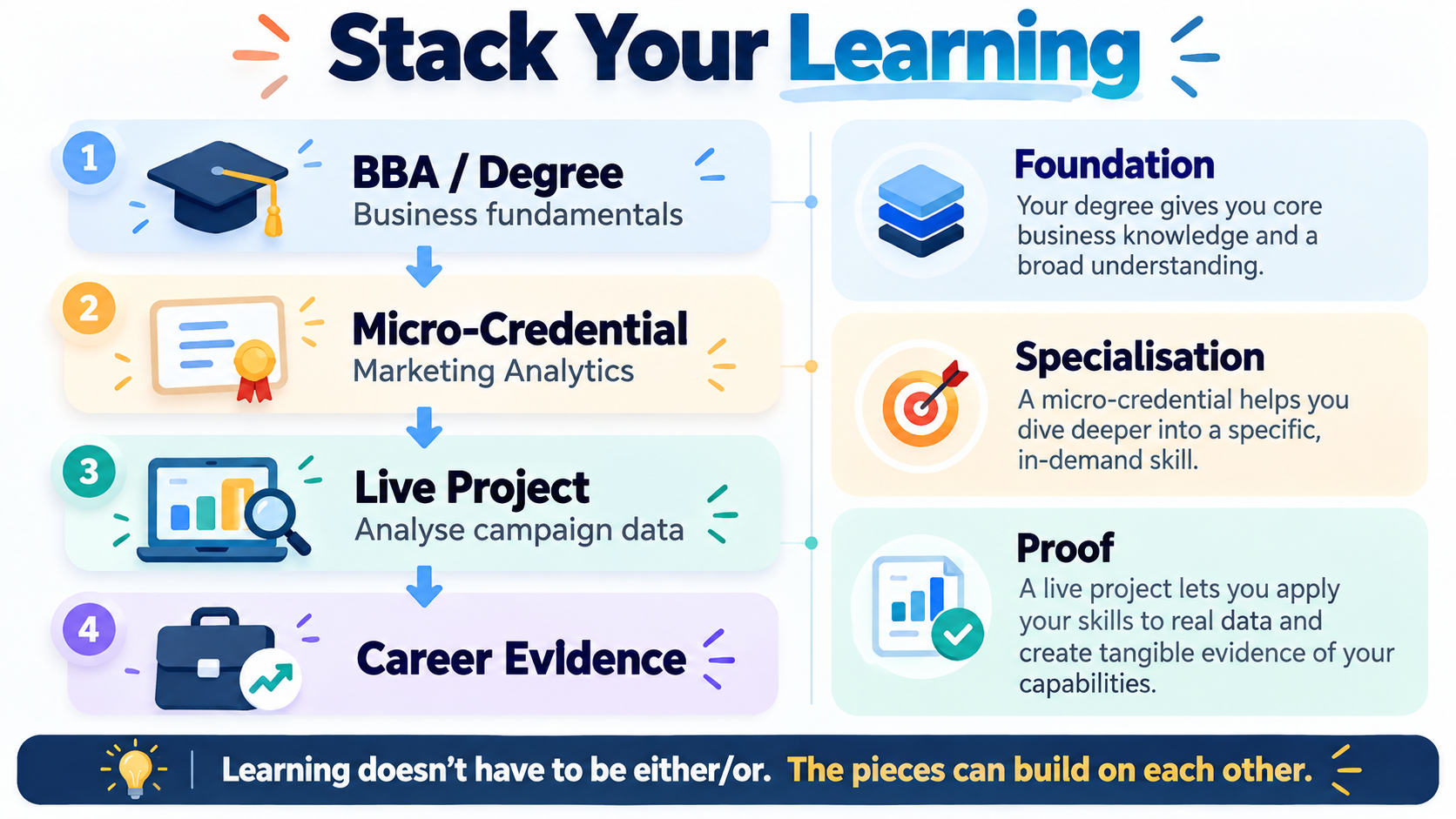
Imagine you're pursuing a BBA.
Your degree gives you business fundamentals.
You add a micro-credential in marketing analytics.
Then you complete a live project where you actually analyse campaign data.
Now the pieces connect.
Education + specialised skill + evidence.
That's much stronger than treating learning as an either-or decision.
And because workplace skills are changing quickly, you probably won't stop learning when you graduate anyway.
Your degree might be the largest qualification you complete.
It probably won't be your last learning experience.
So don't ask:
“Should I choose a degree or a micro-credential?”
Start with:
“What does my career require right now?”
Sometimes the answer will be a degree.
Sometimes it will be a focused credential.
And increasingly, it may be a combination of both.
Frequently Asked Questions
Can micro-credentials replace a bachelor's degree?
Not automatically. Micro-credentials develop focused capabilities, while bachelor's degrees provide broader academic qualifications that many jobs and postgraduate programmes may require.
Are micro-credentials useful for getting a job?
They can be, especially when the credential teaches a skill relevant to the role and you can demonstrate that skill through projects or work experience.
How do I know whether a micro-credential is worth doing?
Check the provider, curriculum, assessment method, industry relevance and whether the programme helps you build something you can actually demonstrate.



Comments
Be the first to share your thoughts on this article.