Graduation can feel like the finish line.
Years of classes.
Assignments.
Exams.
Finally, the degree arrives.
And then?
You're done learning. Right?
Not quite.
Your degree may be one of the most important learning experiences of your life.
But the idea that you study once in your early twenties and use that same knowledge for the next 40 years is becoming increasingly unrealistic.
Technology changes.
Industries change.
Jobs change.
And sometimes you change.
That makes lifelong learning less of a motivational phrase and more of a career skill.
Your Degree Gives You a Foundation
This doesn't mean degrees are becoming irrelevant.
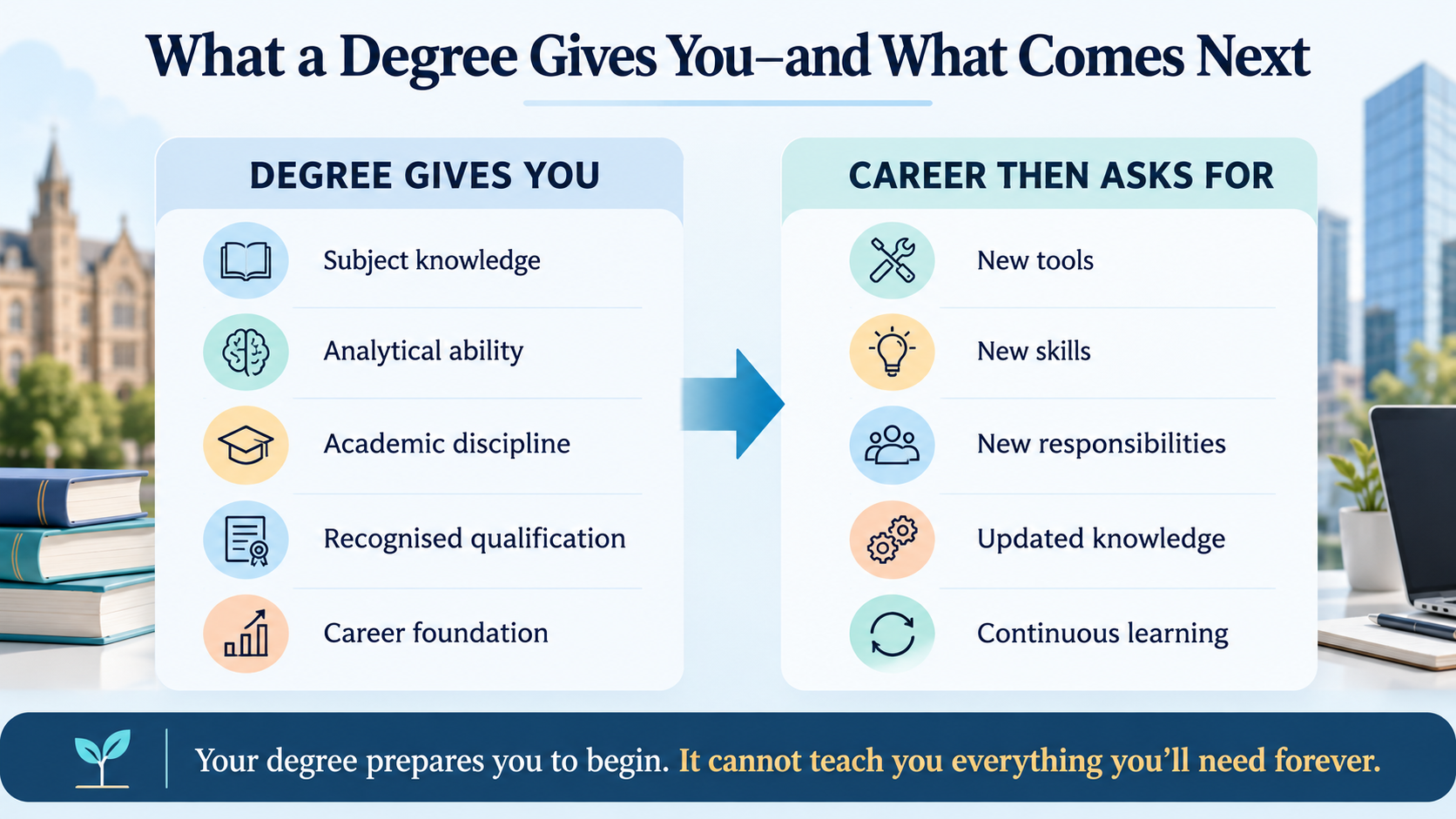
A good degree can give you:
- Subject knowledge
- Academic discipline
- Analytical ability
- A recognised qualification
- Exposure to different ideas
- A foundation for your career
That's valuable.
But think about what happens after graduation.
A marketing graduate may discover new AI tools transforming campaigns.
A finance professional may need stronger analytics capabilities.
A developer may need to learn a new technology stack.
A manager may suddenly need to understand data, automation or sustainability.
Your degree prepares you to begin. It cannot teach you everything you'll need forever.
Your Job Will Probably Change Even If Your Title Doesn't
Imagine that you remain in the same profession for ten years.
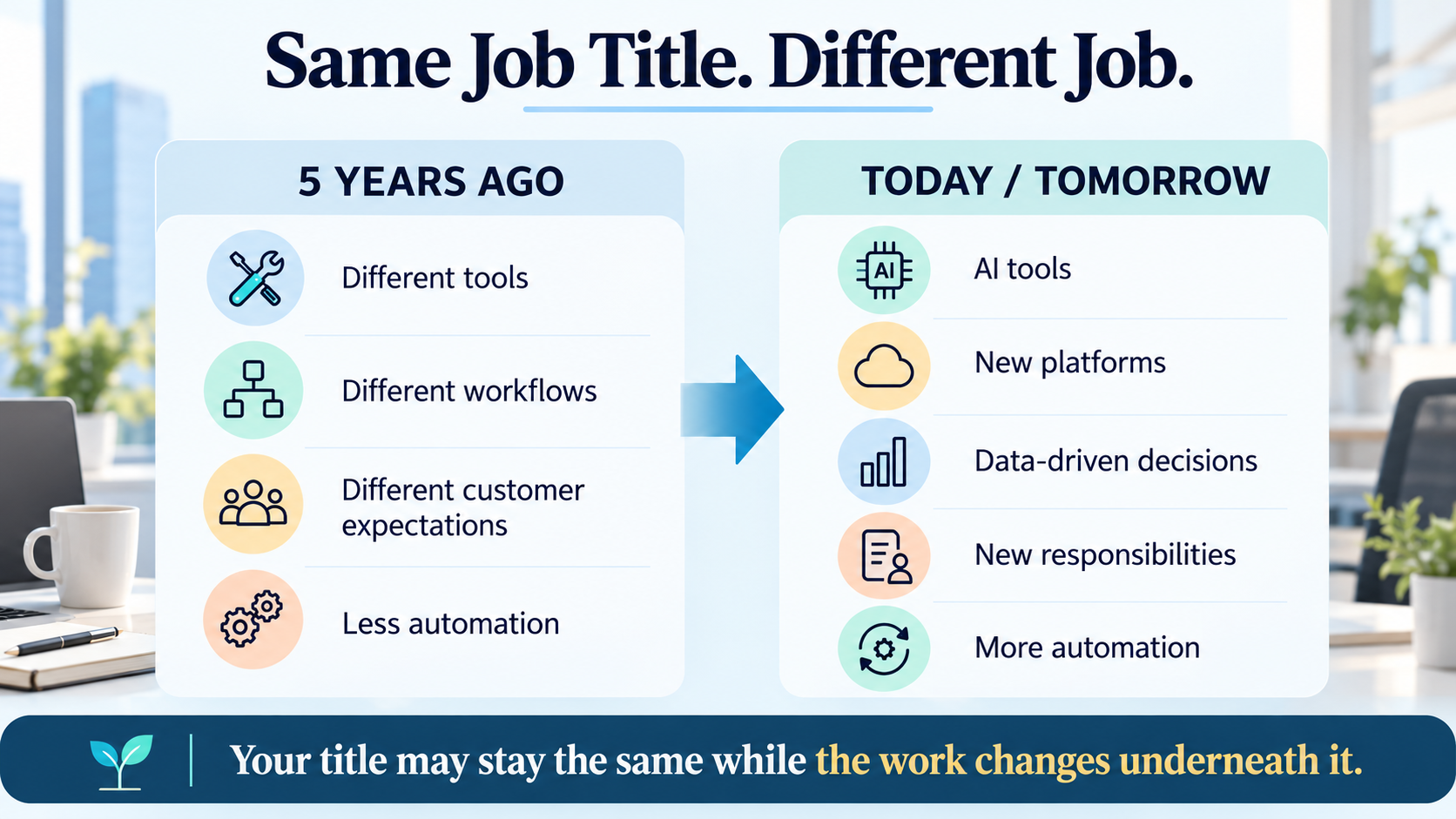
That doesn't mean the work stays the same.
The tools may change.
Customer expectations may change.
Regulations may change.
Technology may automate certain tasks.
New responsibilities may appear.
The World Economic Forum estimates that 39% of workers' existing skill sets will change or become outdated between 2025 and 2030.
That's a significant shift in only five years.
So learning cannot be something you return to only when your career goes wrong.
It needs to become part of how you work.
Lifelong Learning Doesn't Mean Collecting Degrees Forever
This is important.
You don't necessarily need a new degree every few years.
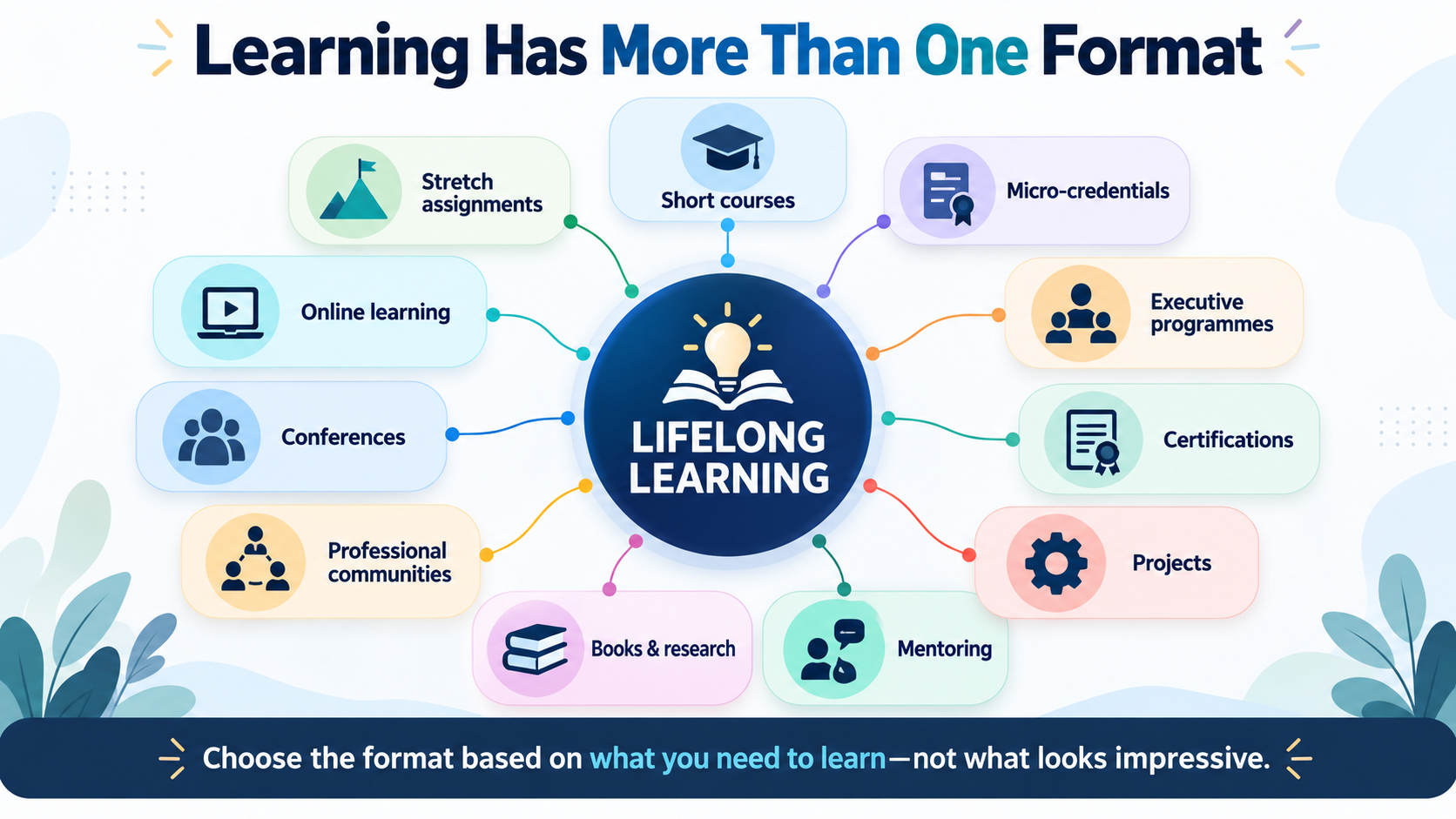
Learning can happen through:
- Short courses
- Micro-credentials
- Executive programmes
- Certifications
- Workplace projects
- Mentoring
- Books and research
- Professional communities
- Conferences
- Online learning
- Simply taking on harder problems at work
The format depends on what you're trying to learn.
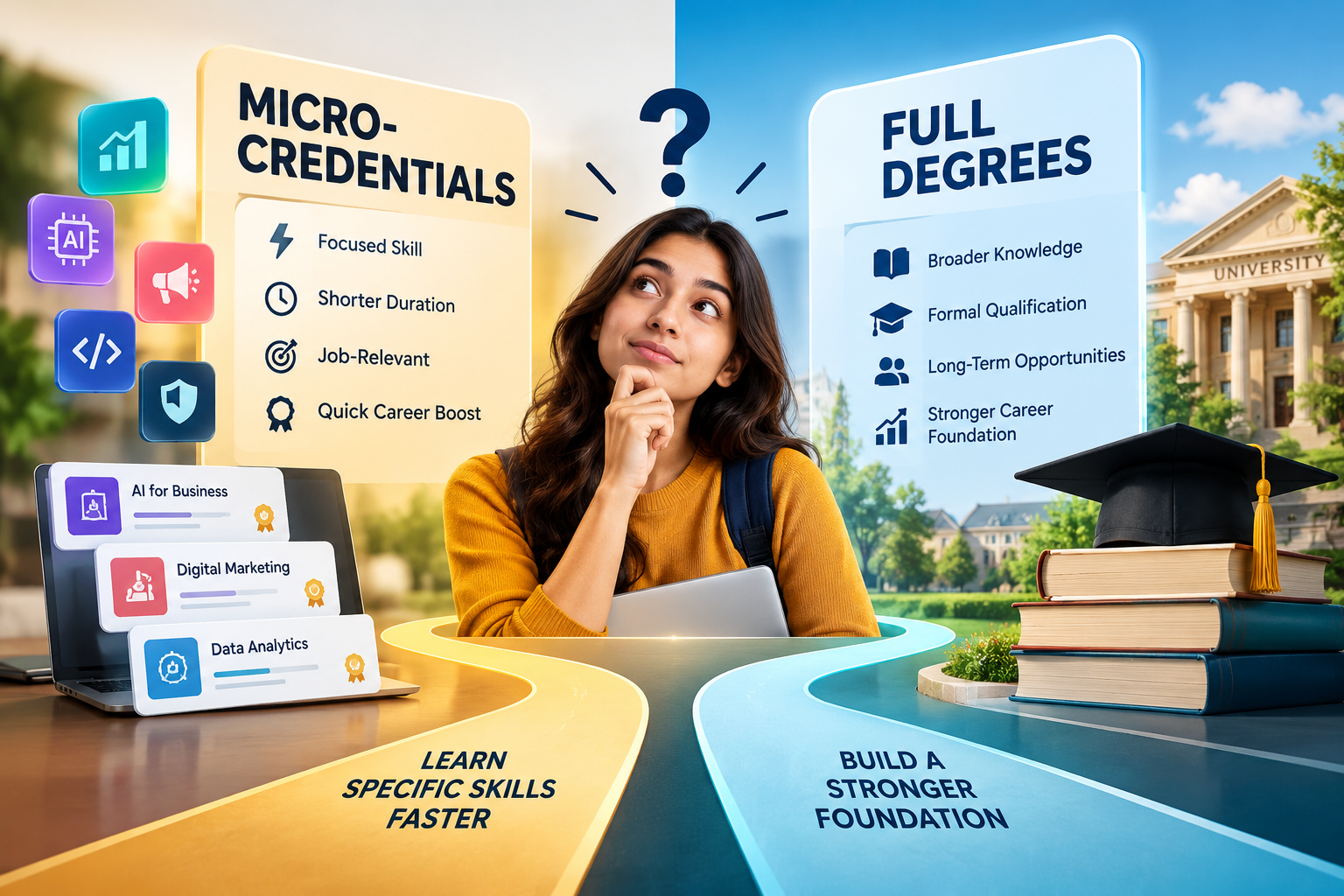
Need a recognised qualification for a major career transition?
A degree may make sense.
Need one specialised capability?
A shorter credential might be better.
Need exposure rather than another classroom?
A project could teach you more.
Choose the learning format based on the problem you're trying to solve.
Find the Right Learning Format
Explore Executive & Certificate ProgrammesDon't Wait Until You Become Outdated
Many people start learning only when something forces them to.
A promotion they didn't get.
A job loss.
A new technology they suddenly need.
A younger colleague who knows tools they haven't used.
A career switch.
At that point, learning becomes urgent.
A better approach is to ask periodically:
What is changing in my profession?
What are people one level above me expected to know?
Which part of my job is becoming less valuable?
Which new skill would make me more useful?
That turns learning from emergency repair into career maintenance.
Learn Close to the Work
Not every useful skill needs a six-month programme.
Sometimes the best learning opportunity is already inside your job.
Volunteer for the project you've never done before.
Ask to sit in on a client meeting.
Work with another department.
Learn how your company's numbers work.
Try the new software.
Ask someone experienced to review your work.
OECD research in 2026 emphasises that changing workplaces require not only skill development but also opportunities for workers to use those skills effectively on the job.
That's the important part.
Learning becomes much stronger when you apply it.
Build a Learning Habit, Not an Annual Resolution
“I'm going to upskill this year” is easy to say.
Then work becomes busy.
Three months disappear.
The course remains unfinished.
Instead, make learning smaller.
One hour every week.
One useful article.
One module.
One new tool.
One conversation with someone in a different role.
One project every quarter.
The goal isn't to constantly feel like a student.
It's to keep your knowledge moving.
Don't Learn Everything
There's also a danger at the other extreme.
AI is trending.
So you take an AI course.
Cybersecurity looks promising.
Another course.
Product management sounds interesting.
Another certificate.
That's not lifelong learning.
That's random learning.
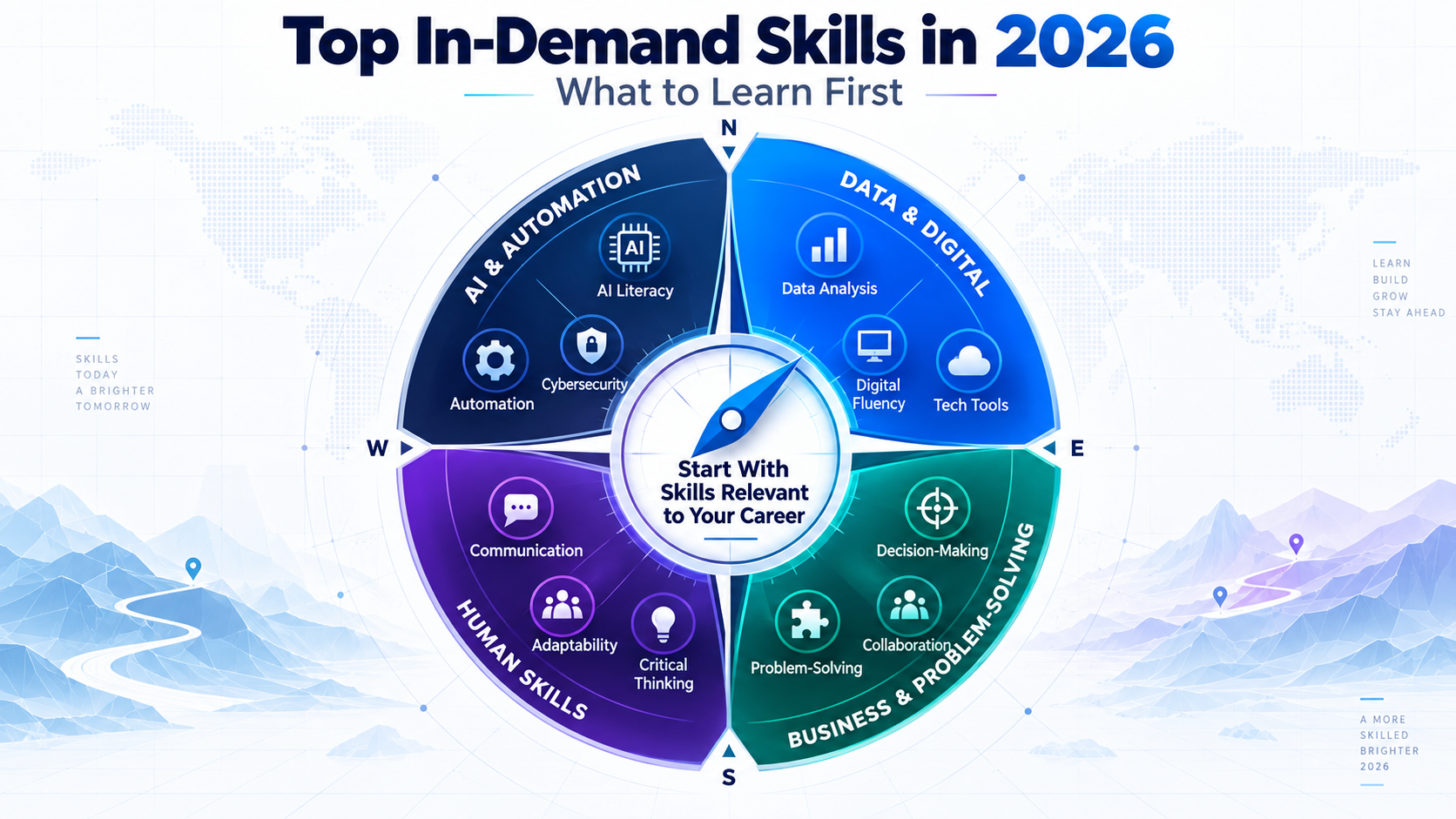
Start with direction.
What career am I building?
Then decide what knowledge strengthens it.
LinkedIn's 2026 research reflects a labour market increasingly focused on demonstrable skills rather than only degrees, titles or linear career paths.
That makes continuous skill development valuable—but only when those skills connect to something meaningful.
Your Career May Have More Than One Chapter
You may not work in one field forever.
Someone who begins in sales may move into marketing.
A software professional may become a product leader.
An engineer may move into management.
A teacher may move into learning and development.
OECD research describes lifelong learning as increasingly important for helping adults respond to changing skill requirements and move across jobs and sectors.
Learning makes those transitions possible.
Your first degree doesn't lock you into one identity.
It gives you a starting point from which you can keep building.
Graduation Isn't the End of Education
Think of your degree as the first major layer of your professional education.
After that, the learning becomes more personalised.
Your industry tells you some of what to learn.
Your ambitions tell you more.
Technology keeps adding new requirements.
And experience teaches you things no course could have predicted.
So don't measure education only by the qualifications on your wall.
Ask something more useful:
“Am I more capable today than I was a year ago?”
If you can keep answering yes throughout your career, your degree has done something bigger than help you get your first job.
It taught you how to keep moving after it.
Frequently Asked Questions
What does lifelong learning mean?
Lifelong learning means continuing to develop knowledge and skills throughout your career rather than treating formal education as something that ends after graduation.
Do I need another degree to keep upskilling?
No. Depending on your goal, learning can happen through short courses, certifications, executive programmes, projects, mentoring, workplace experience or self-directed study.
How often should professionals learn new skills?
There is no fixed schedule. A useful habit is to review your skills and career direction regularly and learn whenever technology, your role or your career goals create a meaningful gap.


Comments
Be the first to share your thoughts on this article.