Search for “skills to learn in 2026” and you’ll probably end up with a very long list.
Data analytics. Cybersecurity. Communication. Leadership. Prompt engineering. Digital marketing. Cloud computing.
And after reading it, you may have a new problem:
Where do I actually start?
Because trying to learn every trending skill is neither practical nor useful.
The better approach is to understand which skills are becoming important, which ones matter for your career, and which one you should build first.
What Skills Are Growing Fastest in 2026?
Not Sure Which Skills Fit Your Career?
Explore programmes across technology, business, management and emerging fields-and find a learning path aligned with where you want to go.
Explore ProgrammesTechnology is changing what companies expect from employees, but the story isn't simply “learn tech or get left behind.”
LinkedIn's Skills on the Rise 2026 data shows growing demand for AI capabilities such as prompt engineering and large language models, but also for skills including stakeholder communication, cross-functional collaboration, team management and business development.
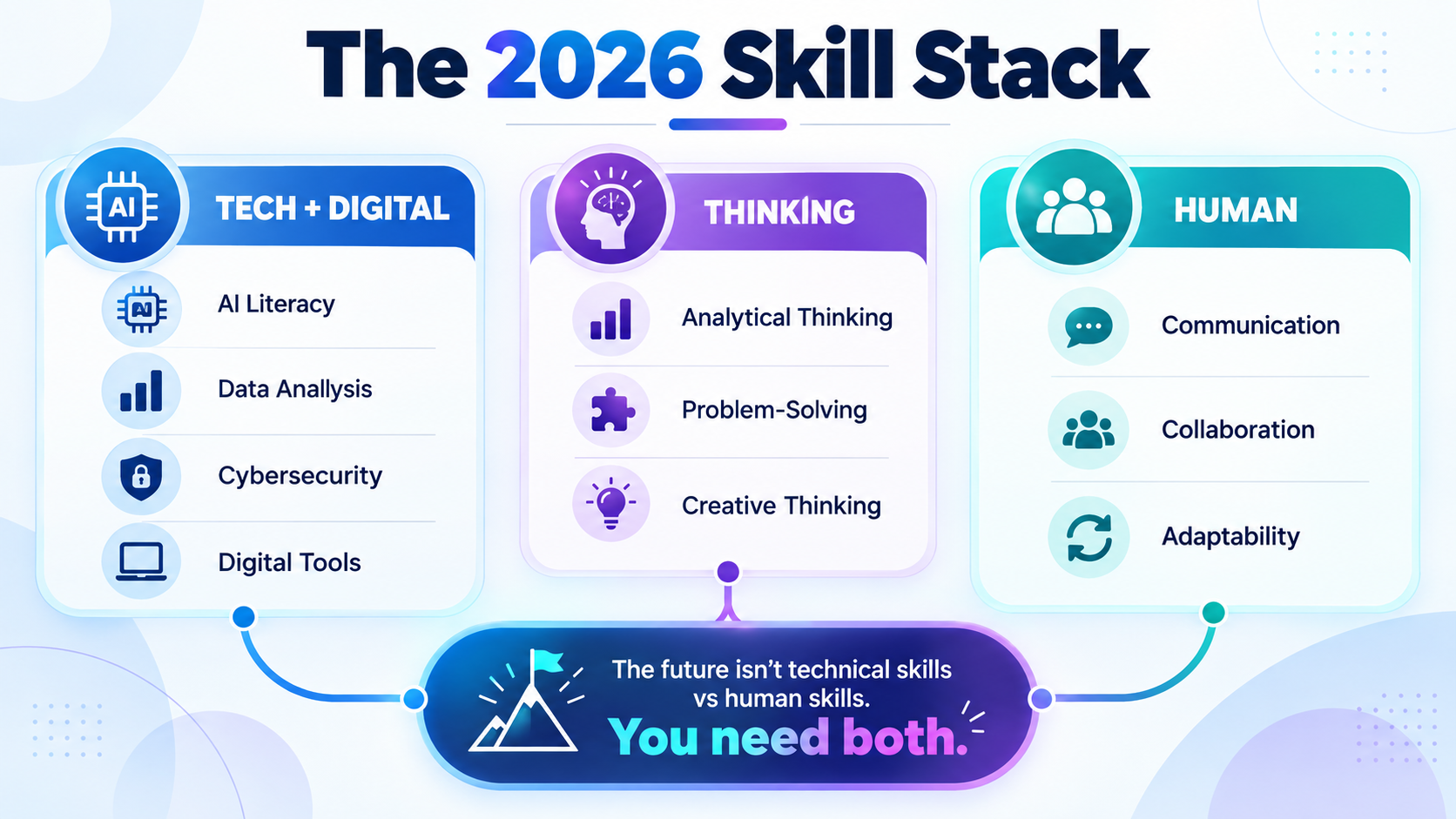
The World Economic Forum sees a similar mix. It identifies AI and big data, cybersecurity and technological literacy among the fastest-growing skills, alongside creative thinking, resilience, flexibility and lifelong learning.
That tells us something important.
The future isn't technical skills versus human skills. You increasingly need both.
So rather than chasing one “skill of the year,” think about building a skill stack.
1. AI and Digital Literacy
You don't necessarily need to become an AI engineer.
But you should understand how AI affects the kind of work you want to do.
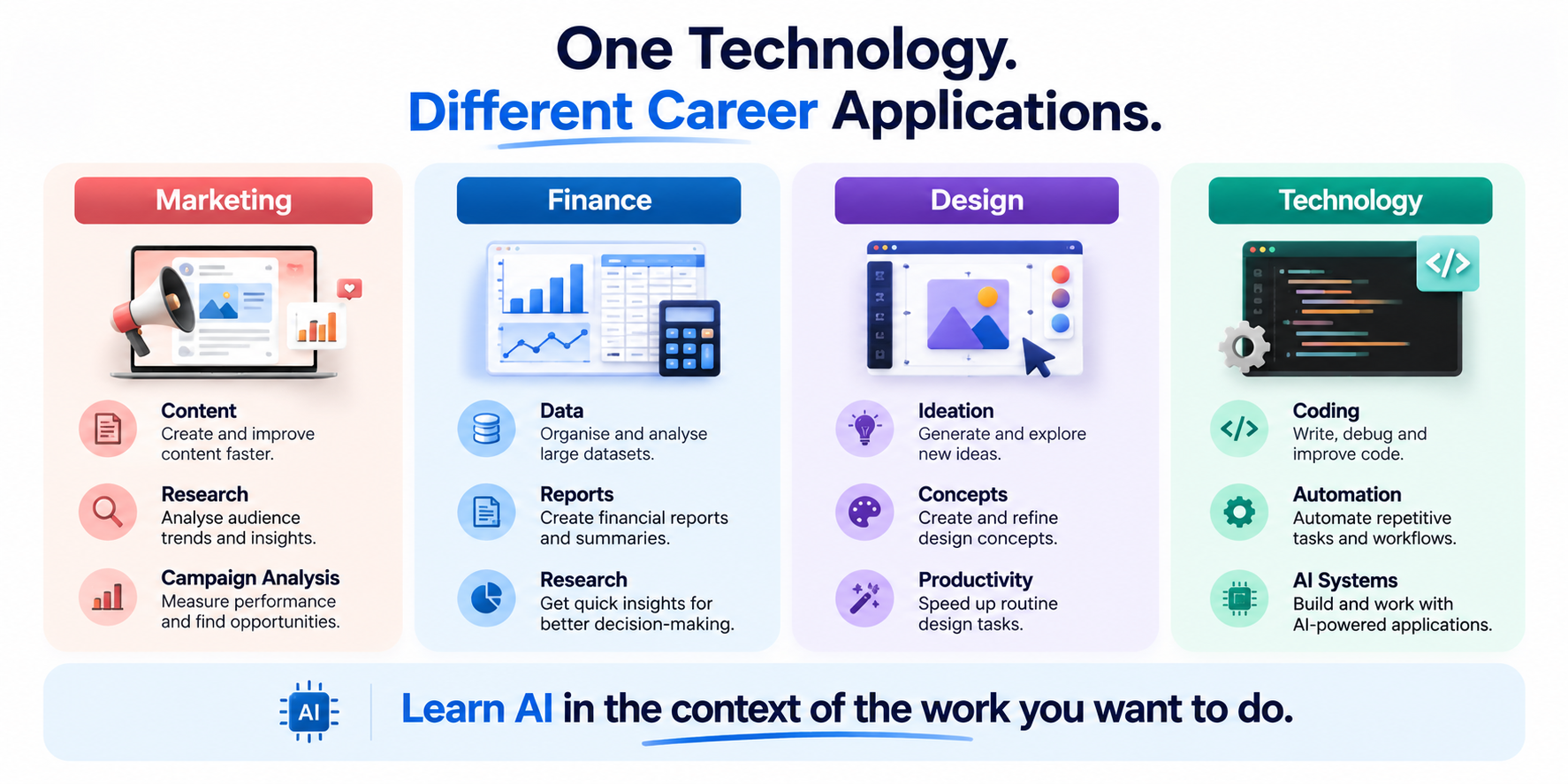
That could mean using AI to research information, analyse data, automate repetitive tasks, improve content, write code or generate ideas.
The exact application will differ depending on your career.
A marketer may use AI differently from a finance professional. A designer will use it differently from an engineer.
The valuable skill isn't simply knowing an AI tool.
It is knowing how to use technology to do your work better—and knowing when not to trust it.
2. Analytical Thinking and Data Skills
Companies have access to more information than ever.
What they need are people who can make sense of it.
That doesn't mean everyone needs advanced statistics or Python.
For some careers, basic spreadsheet skills and the ability to read a dashboard may be enough to start. For others, SQL, Power BI, Python or advanced analytics may become important.
What matters is the underlying ability to ask:
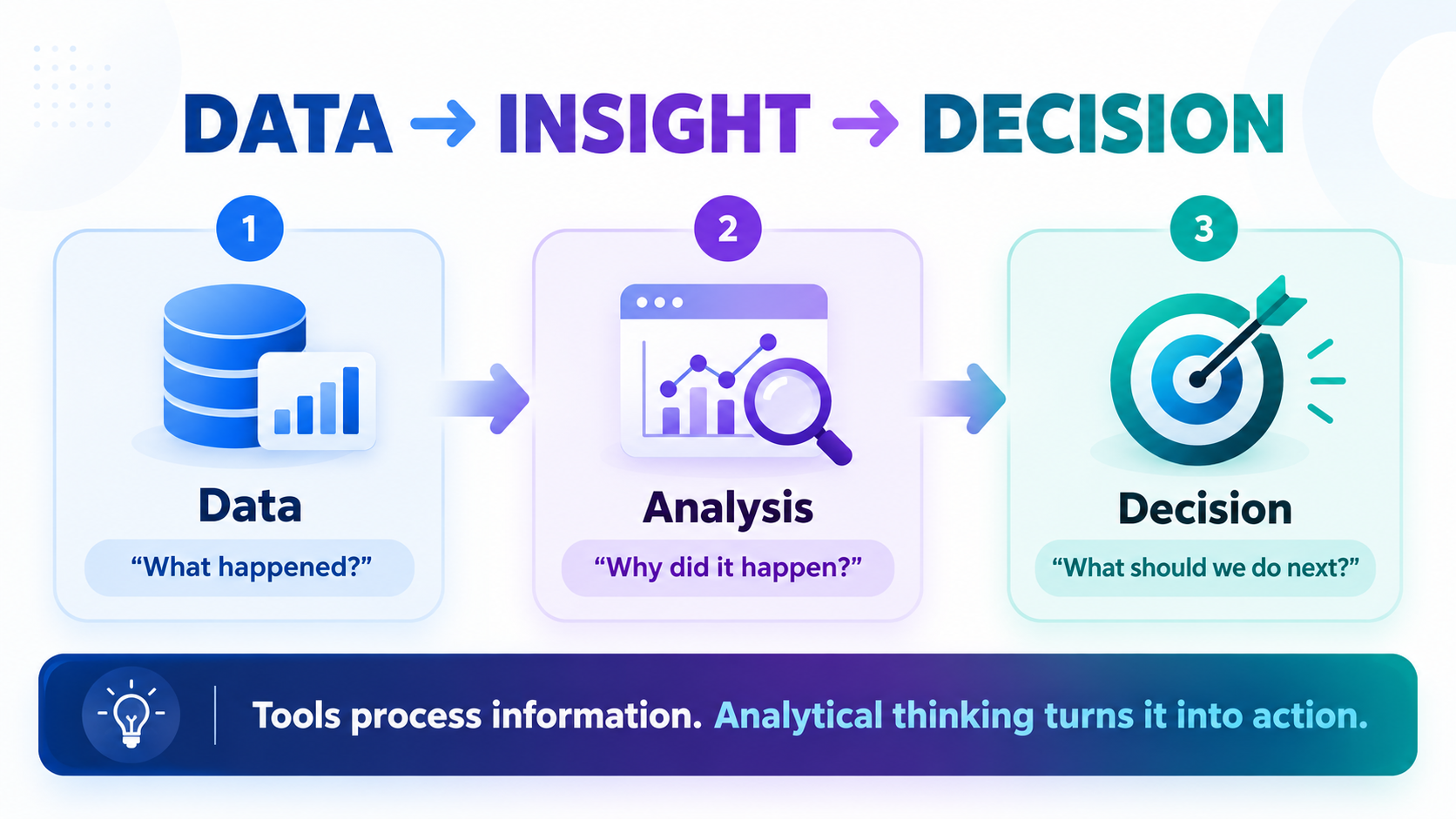
What is this data telling me? Why is it happening? And what should we do about it?
The World Economic Forum says analytical thinking remains the most sought-after core skill among employers surveyed.
Tools help you analyse.
Thinking helps you decide.
3. Communication and Collaboration
Imagine you have solved a difficult problem but cannot explain your solution clearly.
At work, that becomes a problem of its own.
You may need to explain an idea to your manager, present findings to a client, work with another department, write a convincing email or disagree with someone professionally.
These may sound like “soft skills.”
They aren't soft when your work depends on them.
As AI takes over more routine tasks, the ability to communicate, collaborate, influence and understand people becomes even more valuable.
4. Problem-Solving and Creative Thinking
Employers don't only need people who can follow instructions.
They need people who can figure out what to do when the instructions aren't obvious.
That might mean fixing a process that isn't working, finding another way to reach customers, reducing costs or spotting an opportunity others have missed.
And here's the interesting part:
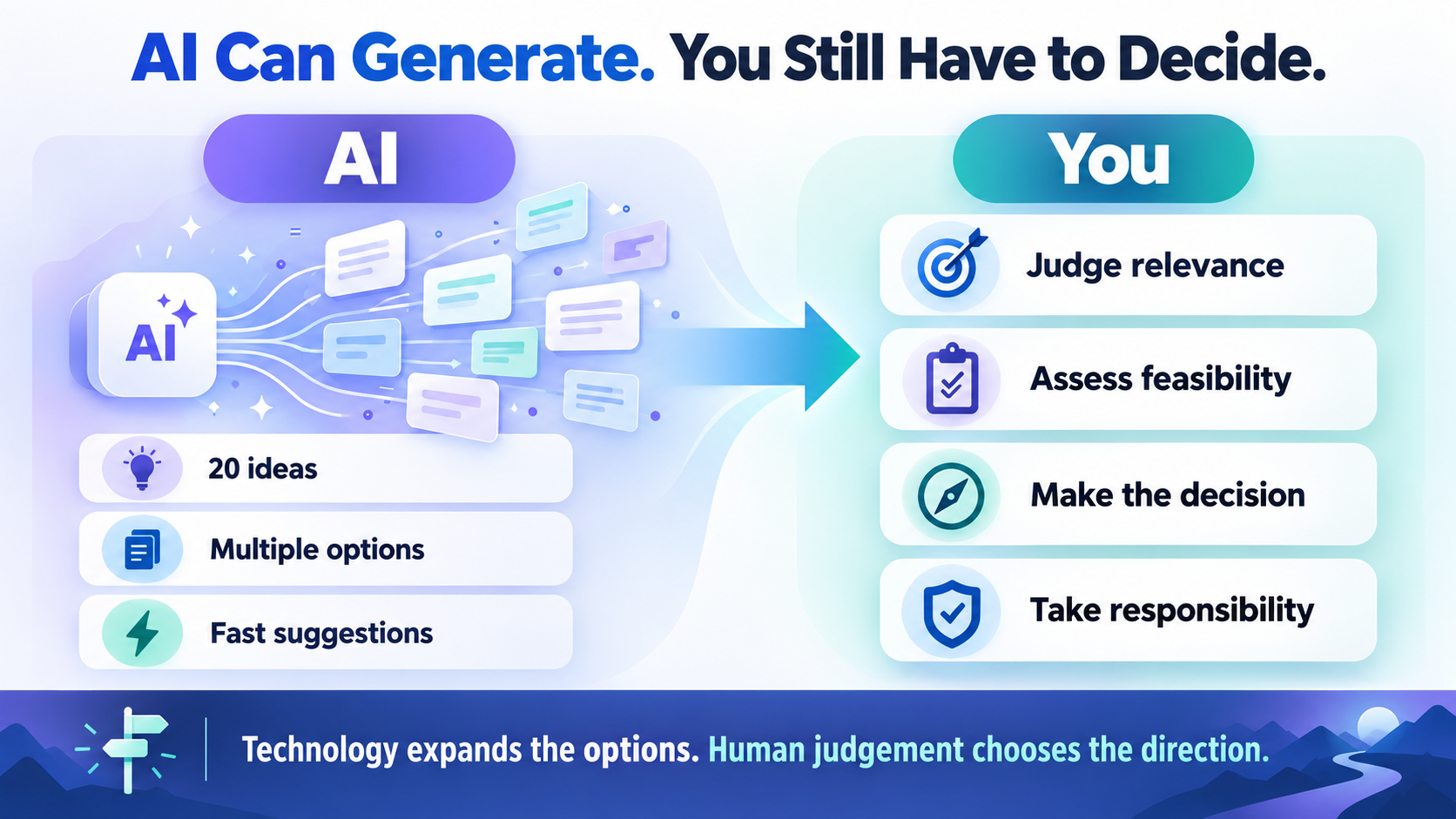
AI can give you twenty ideas in seconds.
Your value comes from knowing which idea is worth pursuing and why.
That's where creativity and judgement become important.
5. Adaptability and the Ability to Keep Learning
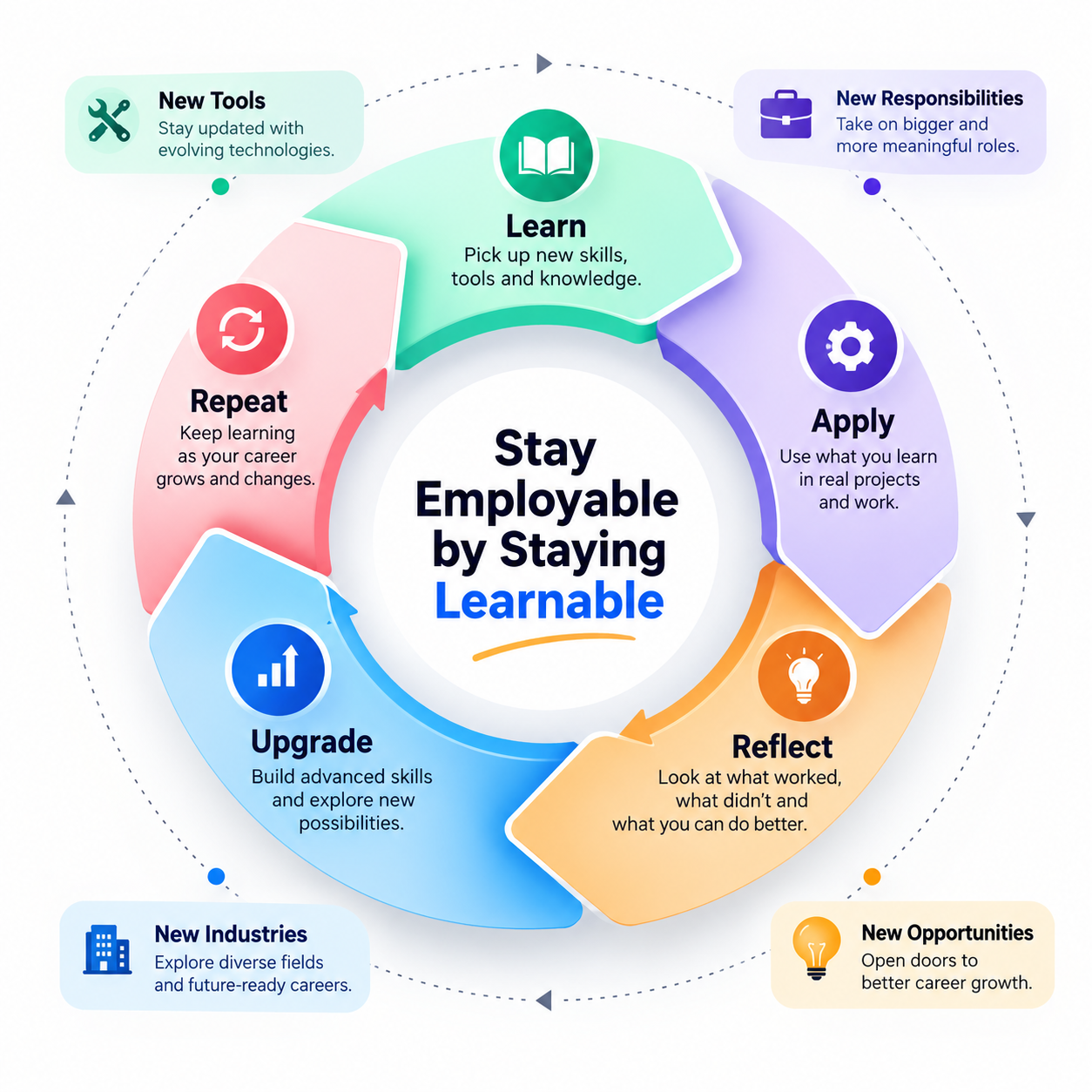
One of the most useful skills in 2026 may not be a specific technology at all.
It is the ability to learn something new without starting from zero every time.
The World Economic Forum estimates that 39% of workers' existing skill sets will be transformed or become outdated between 2025 and 2030.
So the skill you learn today may evolve.
The software may change.
The job description may change.
Your career may change too.
Being comfortable with learning is becoming part of being good at your job.
So, What Should You Learn First?
Don't begin with the trend.
Begin with the career.
Suppose you want to work in digital marketing.
You might need marketing fundamentals first, followed by analytics, advertising platforms, AI tools and communication.
If you want to become a data analyst, the sequence may be Excel, SQL, visualisation and then Python.
If you want to work in HR, communication, HR fundamentals, Excel, analytics and AI-enabled recruitment tools might make more sense.
Your first skill should be the one that brings you closer to doing the work you actually want to do.
A simple way to decide is to ask three questions:
- What do entry-level jobs in my chosen field ask for repeatedly?
- Which of those skills do I currently lack?
- Which skill can I practise through a real project?
That third question matters.
Don't Just Learn It. Use It.
Completing five courses doesn't necessarily mean you have five skills.
You build a skill by using it.
If you're learning Excel, analyse a real dataset.
Learning digital marketing? Build a small campaign.
Learning design? Create a portfolio.
Learning AI? Use it to solve a problem related to your field.
A project gives you something a certificate alone cannot: proof.
So don't worry about learning everything that is trending in 2026.
Build the fundamentals.
Develop digital and AI literacy.
Strengthen how you think and communicate.
Then go deeper into the skills that matter for your career.
Because the most valuable skill isn't necessarily the one everyone is talking about.
It's the one you can actually use.
Don’t Learn Everything. Learn What Moves You Forward.
Start with the skills your chosen career demands. Build them through real application, then keep expanding your skill stack as your career grows.
Find Your ProgrammeFrequently Asked Questions
What are the most in-demand skills in 2026?
AI and digital literacy, data analysis, communication, problem-solving, adaptability and collaboration are among the skills becoming increasingly important across industries.
Which skill should a student learn first?
Start with the skill most relevant to the career you want. Look at entry-level job descriptions in that field and identify the capabilities employers repeatedly ask for.
Should students learn multiple skills at the same time?
It is usually better to build one or two related skills deeply rather than trying to learn everything at once. Create a skill stack that supports a specific career direction.


Comments
Be the first to share your thoughts on this article.