A few years ago, choosing a degree often meant answering two questions:
Which course? Which college?
Today, parents and students have another decision to make:
How should the student learn?
On campus?
Online?
Or through a programme that combines a degree with real workplace experience?
The number of choices can make the decision feel more complicated.
But there is no single learning mode that is automatically right for every student.
The better question is:
Which learning environment gives your child the best chance of succeeding?
Option 1: The Traditional Campus Degree
This is the format most parents already know.
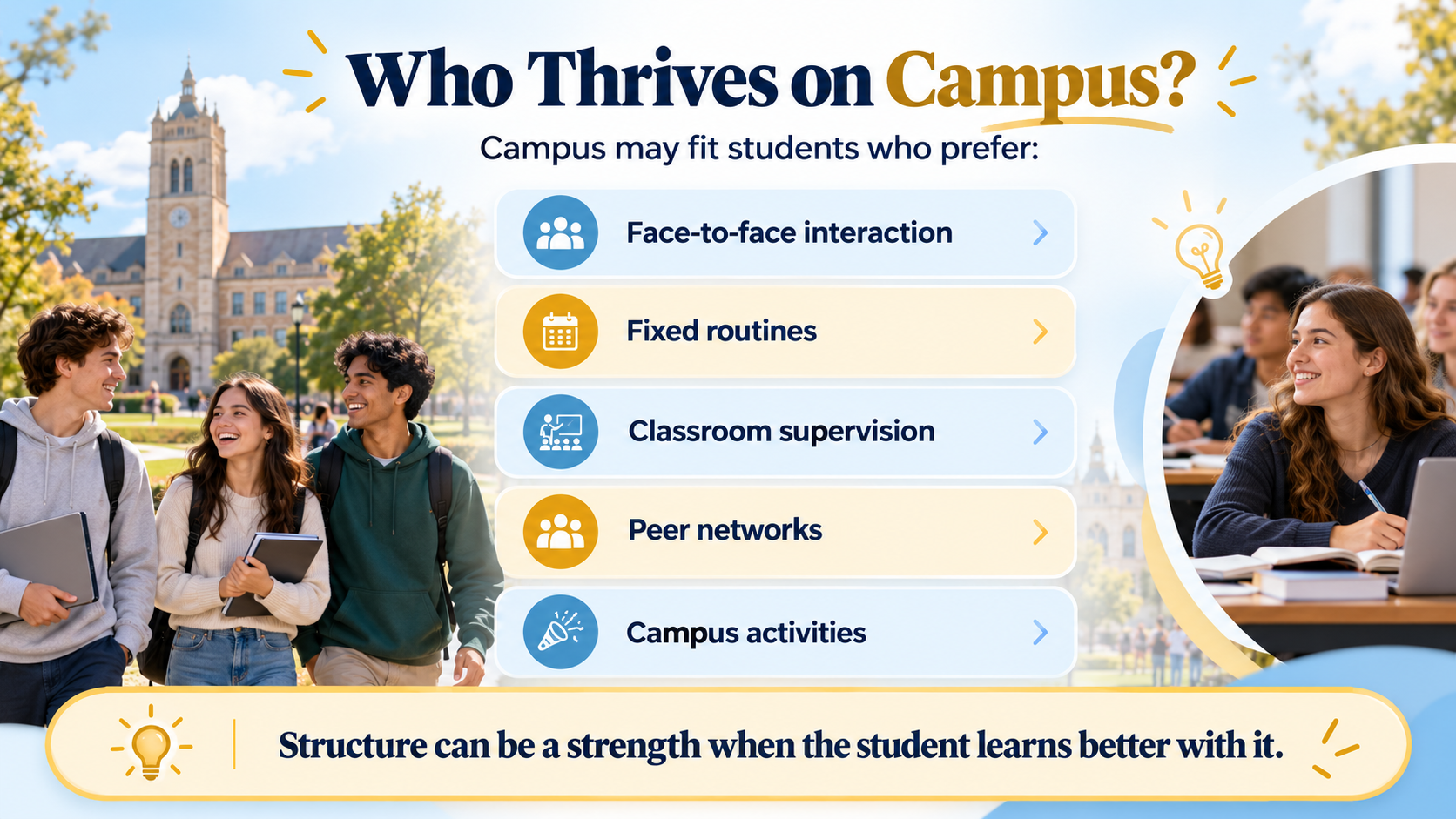
Students attend classes physically, interact with faculty and classmates, participate in campus activities and follow a structured academic timetable.
For many 18-year-olds, that structure can be valuable.
Campus learning may suit students who:
- Prefer face-to-face interaction
- Benefit from a fixed routine
- Want a traditional college experience
- Learn better with regular classroom supervision
- Want access to campus societies, activities and peer networks
It can also give young learners the space to become more independent while still operating within a structured environment.
But campus learning isn't automatically better simply because it's familiar.
Parents should still ask about curriculum, faculty, internships, industry exposure and career outcomes.
The mode is only one part of the decision.
Option 2: The Online Degree
Online education gives learners much greater flexibility around where they study.
That can be valuable for students who want to combine education with work, internships, competitive examinations, family responsibilities or other commitments.
But parents should check one thing before everything else:
Is the programme properly recognised?
UGC states that undergraduate and postgraduate degrees awarded through recognised online or ODL programmes, when offered in accordance with its regulations, are to be treated as equivalent to the corresponding conventional awards. Students should verify the recognition of the institution and programme for the relevant admission session.
Online learning can work particularly well for students who:
- Are comfortable studying independently
- Can manage their own schedule
- Want flexibility
- Plan to work or intern alongside their degree
- Don't need the daily structure of a physical campus
But flexibility comes with responsibility.
A student who constantly needs someone else to make them study may struggle with an unstructured online routine.
That's an important conversation to have before enrolling.
Option 3: The Work-Linked Degree
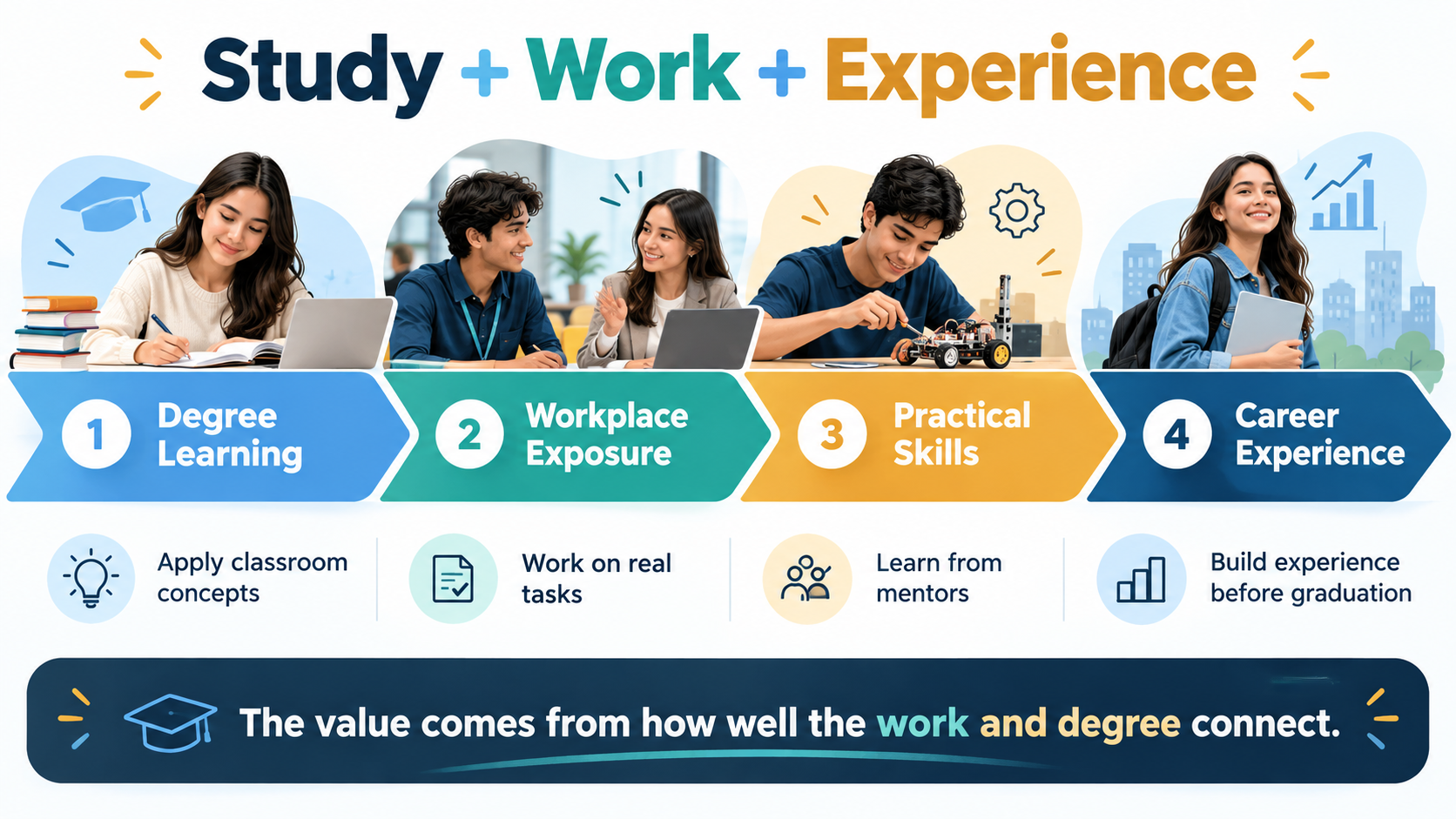
A work-linked approach tries to connect academic education with structured workplace learning.
Instead of completing the degree first and thinking about experience afterwards, students develop the two alongside each other.
This idea is increasingly visible in India's higher education framework.
UGC has guidelines around apprenticeship-embedded degree programmes, while its undergraduate internship framework recognises internships as part of academic learning and credits.
For a learner, that can mean:
Study + workplace exposure + skills + experience
during the degree itself.
A work-linked format may suit students who:
- Learn better by doing
- Want early exposure to the workplace
- Are clear that they want practical experience
- Want to connect classroom concepts with real work
- Are comfortable balancing academic and professional responsibilities
But parents should look carefully at how the work component actually functions.
Ask:
Who provides the workplace opportunities?
What kind of work will students do?
Is there mentoring?
How does the work connect with the degree?
Simply adding the word “internship” to a programme doesn't automatically make it strong.
Which Mode Is Best for Career Outcomes?
There isn't a universal answer.
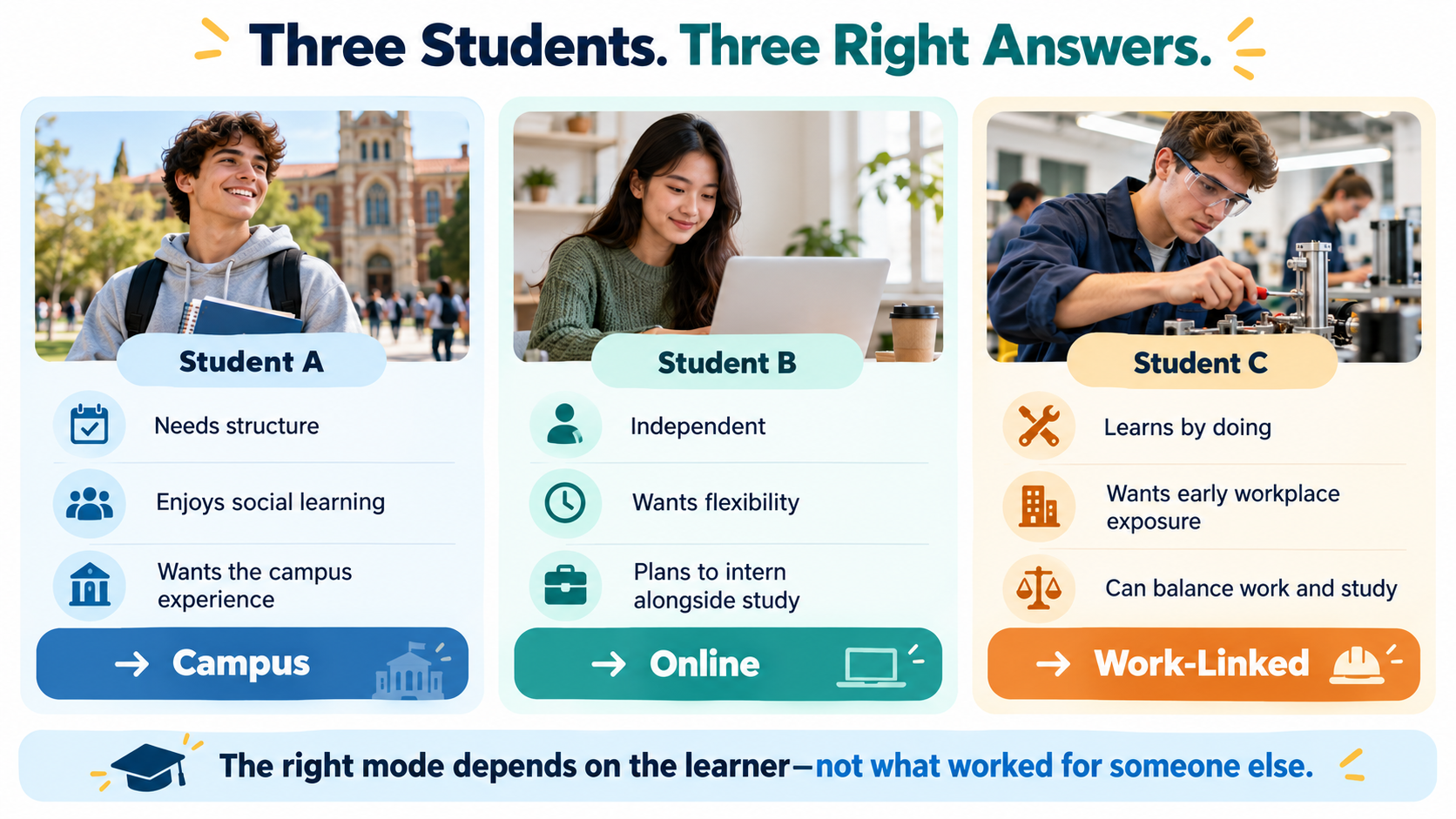
Imagine three students.
Student A thrives around people, needs structure and wants the full campus experience.
Campus learning may be ideal.
Student B is disciplined, wants flexibility and plans to intern throughout college.
Online education may fit better.
Student C wants hands-on learning and would rather start gaining structured work experience alongside the degree.
A work-linked programme may make more sense.
The mistake is choosing a mode based on what worked for someone else's child.
Not Sure Which Learning Mode Fits Your Child Best?
Compare programmes based on learning style, career goals, flexibility and the level of structure your child needs.
Compare ProgrammesParents Should Look Beyond the Brochure
Before choosing any programme, ask five questions:
- Is the university and programme recognised?
This comes first.
- How does my child actually learn best?
Structure and independence matter.
- What skills will students develop beyond the syllabus?
Look for projects, tools and practical learning.
- What exposure to work will the student receive?
An internship in the final semester isn't the same as sustained industry exposure.
- What will the student have to show at graduation?
A degree matters.
But so do skills, projects and experience.
Don't Choose Based Only on Convenience
Online shouldn't be selected only because it is convenient.
Campus shouldn't be selected only because “that's how college is supposed to happen.”
And work-linked learning shouldn't be selected only because earning or experience sounds attractive.
Look at the whole student.
Their maturity.
Their ambitions.
Their learning style.
Their need for structure.
Their financial situation.
And the kind of career they want to build.
The right learning mode is the one the student can actually use well.
Because ultimately, the question isn't simply where they studied.
It's what they learnt, what they experienced and what they became capable of doing along the way.
Frequently Asked Questions
Is an online degree equivalent to a campus degree in India?
Recognised online undergraduate and postgraduate degrees offered in accordance with UGC regulations are treated as equivalent to the corresponding conventional awards. Always verify the specific programme and admission session.
What is a work-linked degree?
A work-linked degree combines academic study with structured workplace exposure such as internships, apprenticeships or other forms of work-based learning.
Which learning mode is best after Class 12?
It depends on the student's learning style, career goals, independence, need for structure and desire for practical experience. There is no single mode that is best for everyone.



Comments
Be the first to share your thoughts on this article.