It's probably one of the first questions you ask before choosing an online degree:
“Will companies actually accept it?”
The short answer is:
Yes—recognised online degrees can be valid qualifications. But getting hired depends on much more than the mode in which you studied.
And that's where the conversation often gets confused.
There are really two separate questions:
Is my online degree recognised?
and
Will my profile convince an employer to hire me?
Let's deal with both.
First: Is an Online Degree Valid in India?
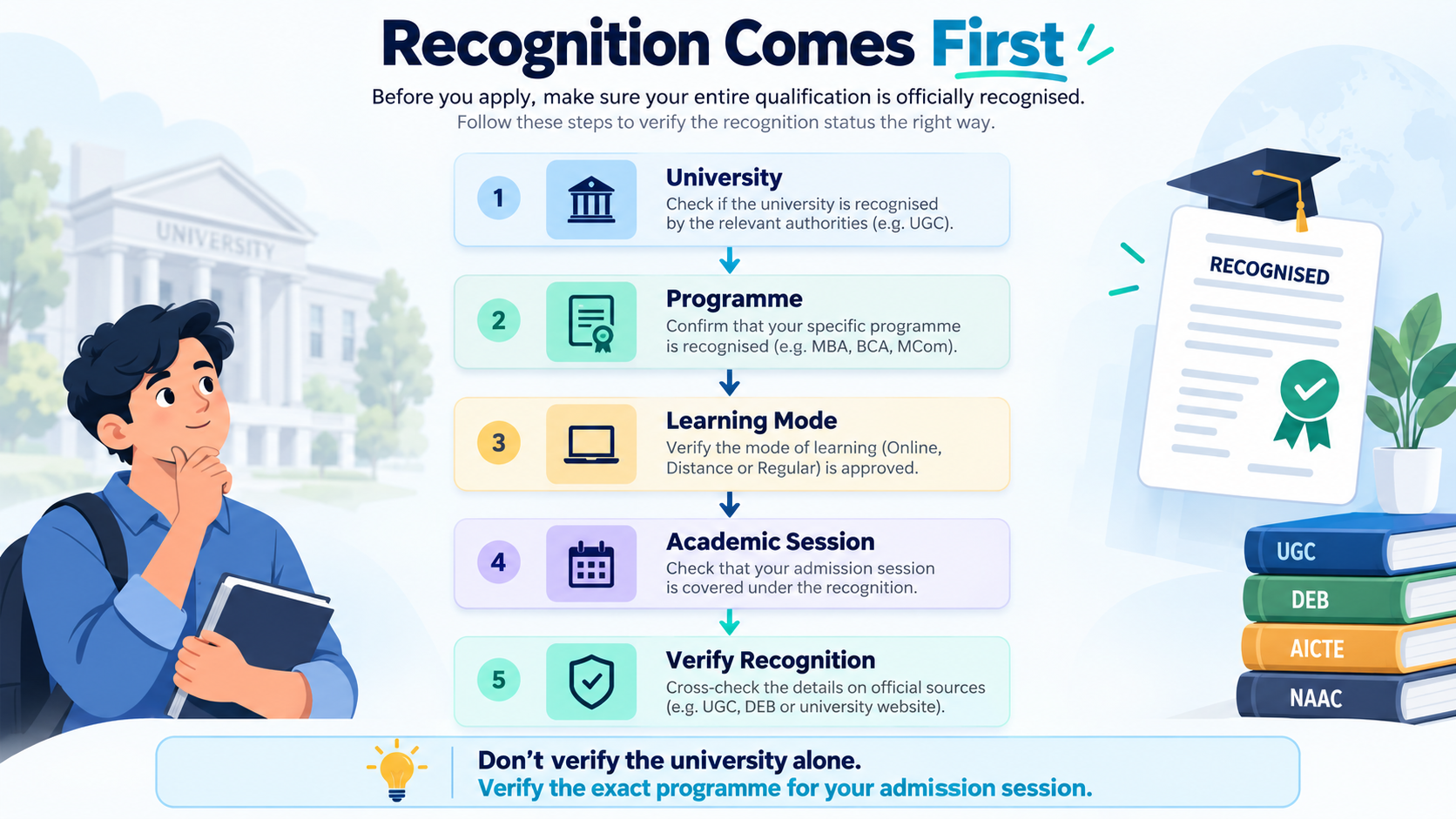
If you're considering an online programme, this is the first thing you should verify.
UGC regulations state that undergraduate and postgraduate degrees awarded through recognised online or ODL programmes, when they conform to the required regulations, are to be treated as equivalent to the corresponding degrees offered through conventional mode.
That is the important regulatory answer.
But there is a crucial condition:
The university and the specific programme need to be recognised or entitled for that mode and academic session.
UGC's Distance Education Bureau specifically advises students to verify the recognition status for the session in which they are taking admission, because recognition in an earlier year does not automatically establish recognition for the next session.
The DEB currently publishes the list of recognised and entitled institutions and programmes online, including entries for the 2026–27 academic year.
So before asking whether employers will accept your degree, first ask:
“Is this exact programme recognised for my admission session?”
Not Every Degree Can Be Offered Online
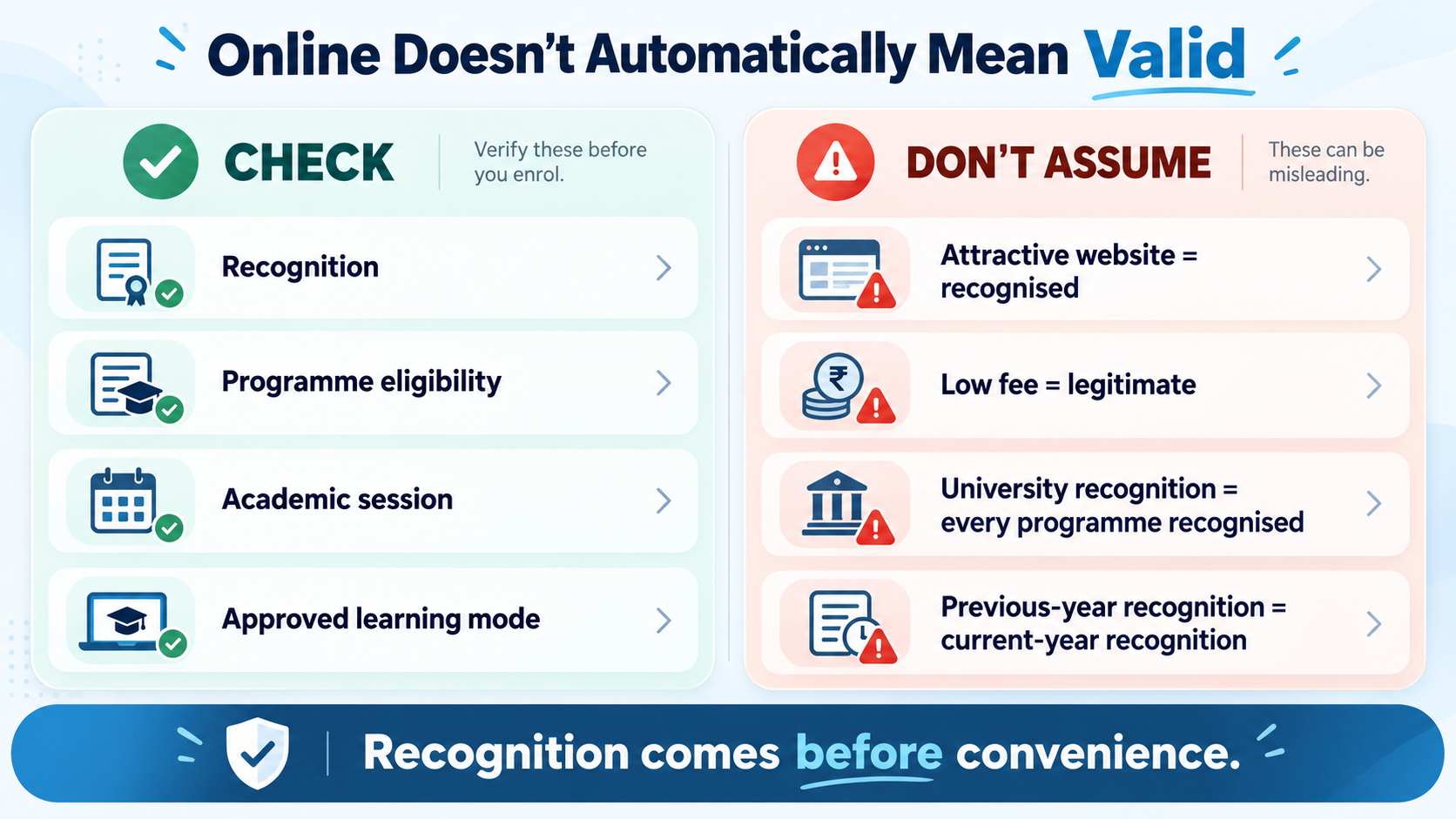
This is another reason to verify before enrolling.
UGC currently prohibits a number of disciplines from being offered through ODL or online mode, including areas such as engineering, medicine, nursing, architecture and law, among others.
So if someone offers you an online programme in a field where online delivery isn't permitted, a slick website or attractive fee shouldn't convince you.
Recognition comes before convenience.
What Does an Employer Actually Look At?
Once the degree is recognised, hiring becomes a different conversation.
Think about what happens when a recruiter opens your résumé.
They may look at:
What did you study?
But they are also likely to ask:
What can you do?
What experience do you have?
Which tools do you know?
What projects have you completed?
Can you communicate clearly?
Do your skills fit this particular role?
That's becoming increasingly relevant as hiring becomes more skills-focused.
LinkedIn's 2026 Skills on the Rise research says employers are increasingly looking beyond degrees, job titles and linear career paths to understand what candidates can actually do.
So the question isn't only whether your degree says online or on-campus.
It's what sits around that degree.
An Online Degree Gives You Flexibility. What Will You Do With It?
Turn Flexibility Into an Advantage
Choose an online programme that gives you room to build skills, projects and work exposure alongside your degree.
Explore Online DegreesThis is where an online learner can create an advantage.
If you don't need to be on campus every day, what are you doing with the flexibility?
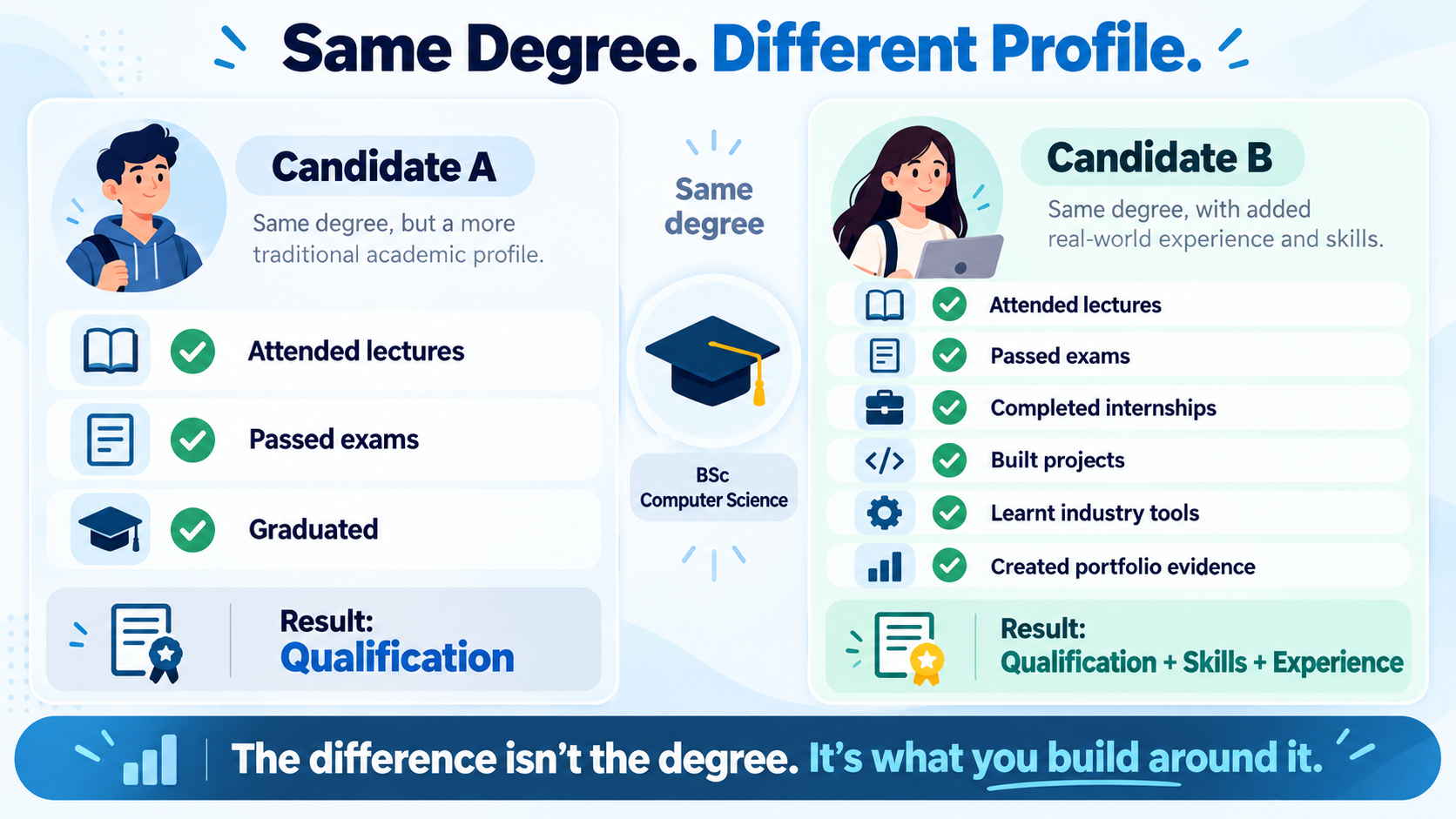
Imagine two candidates.
Both have completed the same recognised online degree.
One attended lectures, passed examinations and graduated.
The other did all of that—but also completed two internships, built relevant projects and learnt industry tools alongside the programme.
Which profile gives an employer more to discuss?
The difference isn't the degree.
It's what the learner did while earning it.
An online programme can give you flexibility.
It's your responsibility to convert some of that flexibility into skills and experience.
Build Proof Alongside the Qualification
Suppose you're pursuing an online BBA and want to enter digital marketing.
Don't wait until graduation to begin learning how campaigns work.
Build a small campaign.
Learn analytics.
Help a college club or small organisation with social media.
Complete an internship.
Create something you can discuss during an interview.
Studying computer applications?
Build projects.
Studying commerce?
Work with spreadsheets, financial models or business data.
Studying HR?
Gain exposure through recruitment, HR operations or people-related projects.
Your degree shows that you completed an academic programme. Your work shows what you can do with what you learnt.
Will Every Employer Think About Online Degrees the Same Way?
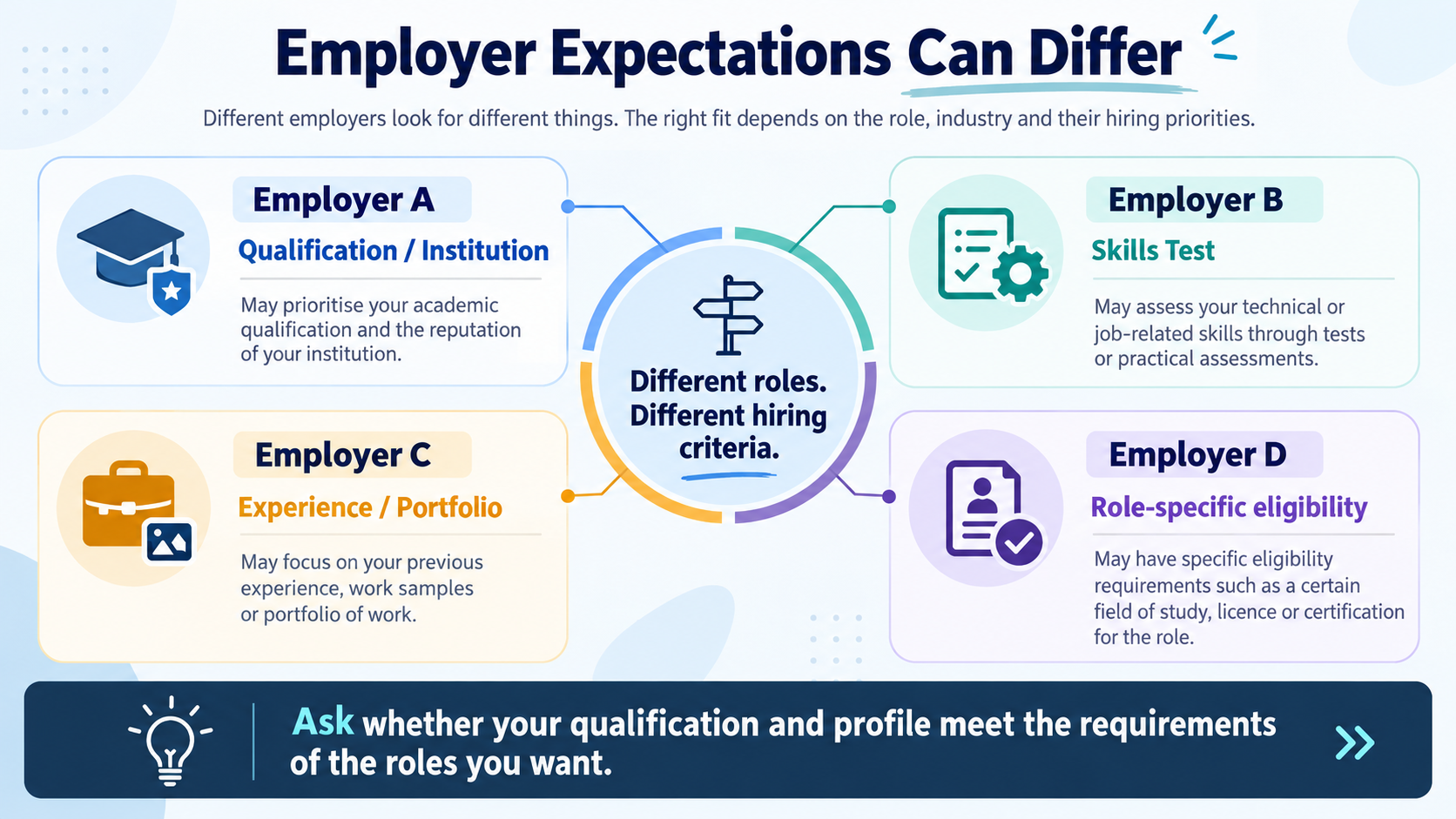
No.
Hiring decisions aren't made by one single “employer.”
Different organisations, industries and hiring managers may have different requirements.
Some roles may have strict qualification or professional eligibility requirements.
Some companies may place greater emphasis on the institution or academic record.
Others may care heavily about skills, tests, portfolios and experience.
That is why statements such as:
“Online degrees are accepted everywhere”
or
“Companies don't accept online degrees”
are both too simplistic.
The more useful question is:
Does the qualification meet the requirements of the roles and organisations I want to apply to?
Look at job descriptions in your target career.
Speak to professionals in that industry.
Understand eligibility requirements early.
How Can You Make an Online Degree Profile Stronger?
Want to Build Experience While You Earn Your Degree?
Explore work-linked programmes that combine recognised academic learning with practical workplace exposure.
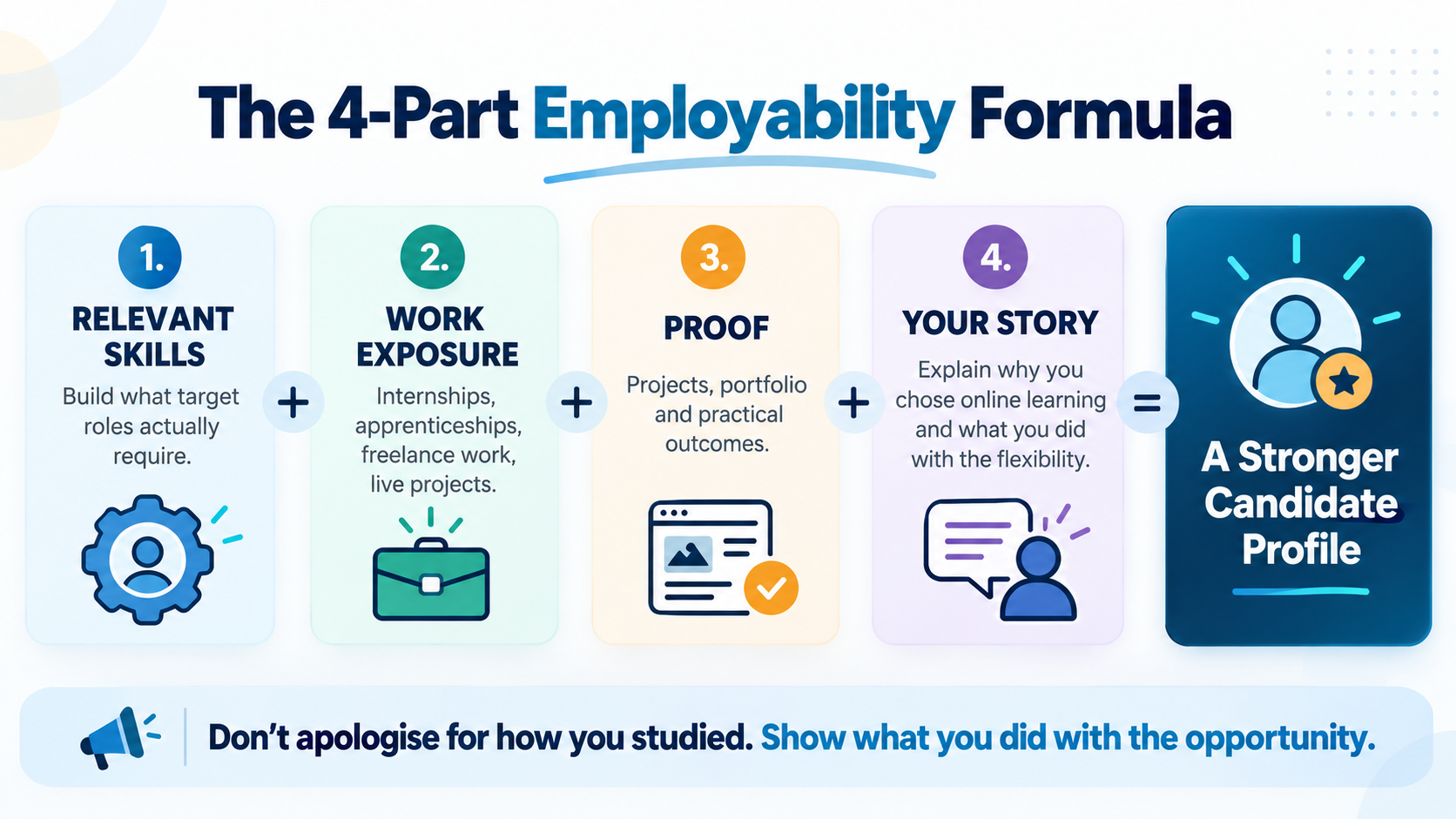
Explore Work-Linked ProgrammesFocus on four things alongside your studies.
- Build relevant skills
Don't collect unrelated certificates. Learn skills connected to the roles you want.
- Gain work exposure
Internships, apprenticeships, live projects, freelance work and professional experience can all help.
- Create proof
Build projects and portfolios that demonstrate your abilities.
- Learn to explain your journey
If an interviewer asks why you chose an online programme, have a confident answer.
Maybe it allowed you to work.
Maybe it gave you flexibility to build experience.
Maybe you were balancing another responsibility.
Don't sound apologetic about the learning mode.
Explain what you did with the opportunity.
So, Should the “Online” Part Worry You?
It should make you verify, not panic.
First make sure the university and programme are appropriately recognised for your academic session.
Then look beyond the qualification itself.
Ask:
What skills will I develop?
What experience can I gain while studying?
What will I be able to show an employer when I graduate?
Because in a skills-focused job market, a qualification is one part of your profile.
A recognised online degree can give you the academic credential. What you build around that degree can make the difference when it's time to get hired.
Frequently Asked Questions
Are online degrees valid in India?
Recognised online degrees from institutions and programmes approved for online delivery can be valid qualifications. Students should always verify the recognition status before enrolling.
Do companies hire candidates with online degrees?
Yes, many do. However, hiring decisions also depend on the role, employer requirements, institution, skills, work experience and overall candidate profile.
How can I make an online degree more valuable to employers?
Use the flexibility of online study to build relevant skills, complete internships, work on projects and create proof that you can apply what you have learnt.


Comments
Be the first to share your thoughts on this article.