
You've completed a BCA.
You know the fundamentals of programming, databases and computer applications.
Now comes another decision.
Should you start working immediately or spend more time studying for an MCA?
Some people will tell you that a postgraduate degree is essential for growing in technology.
Others will say that companies care more about coding skills and practical experience than additional qualifications.
Both arguments contain some truth.
But neither answers the question that actually matters.
What will an MCA add to your existing BCA education, and will that additional learning help you reach your intended career goals?
What Does an MCA Add After BCA?

A BCA introduces students to computing and software-related subjects.
Depending on the university, it may cover programming, databases, computer networks, data structures, web development and computer applications.
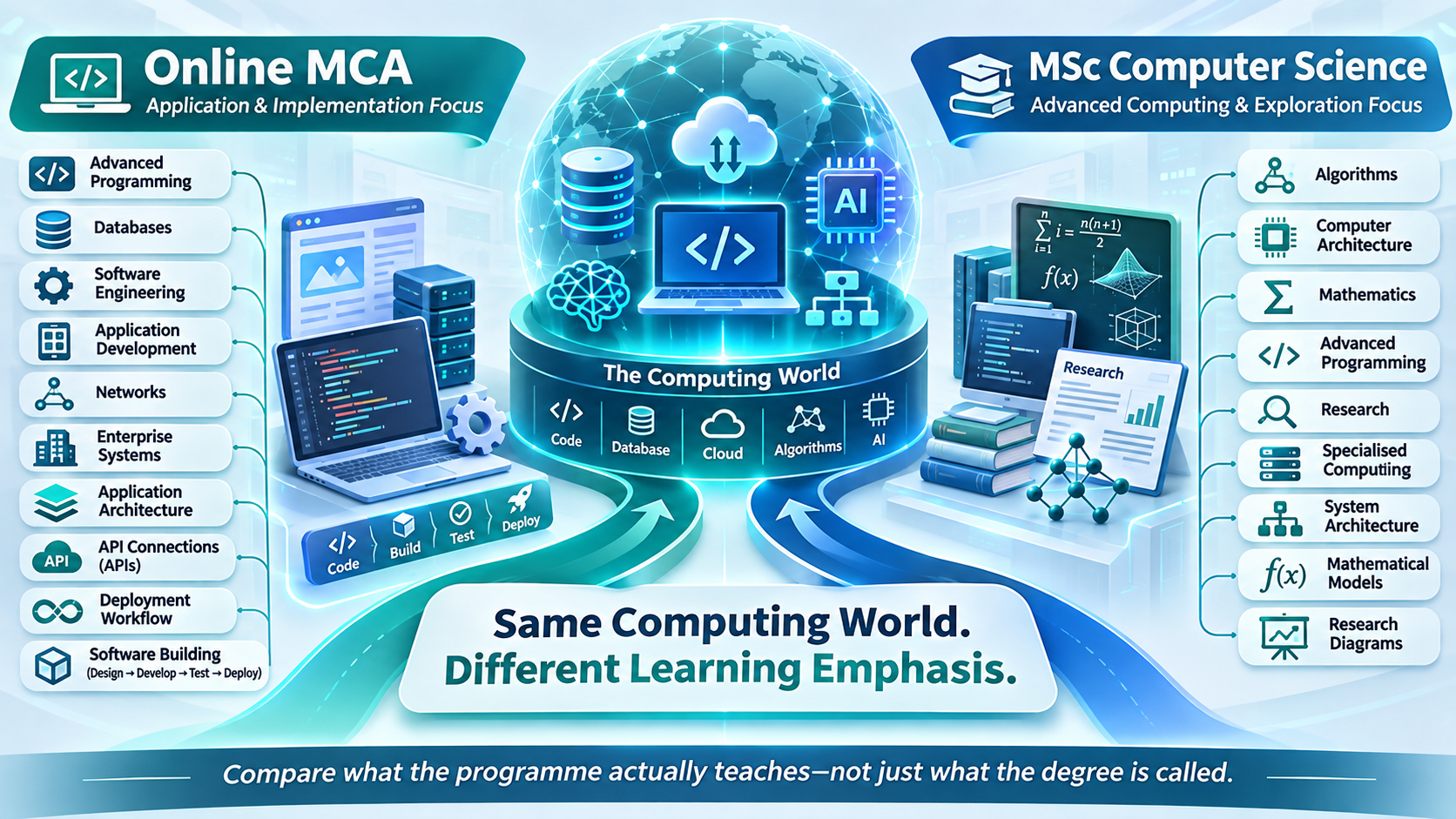
An MCA can build on that foundation through more advanced and specialised study.
You may explore software engineering, advanced programming, database systems, algorithms, cloud computing, AI or related technologies.
The exact subjects depend on the programme.
The important difference should be the level of learning.
If you've already studied basic database concepts during BCA, postgraduate education should ideally help you understand more advanced database design, optimisation or application.
If you've learnt programming fundamentals, the next step might involve building larger systems, understanding architecture or developing more sophisticated software.
An MCA becomes valuable when it extends your capabilities rather than simply repeating what you already know.
Does an MCA Improve Your Eligibility for Jobs?

It can, depending on the role and employer.
Some organisations specify particular postgraduate qualifications for certain vacancies.
Others accept graduates with BCA, BSc Computer Science, BTech or equivalent qualifications and evaluate candidates primarily through technical assessments.
This means an MCA may help you meet eligibility requirements for some positions.
But it does not automatically make you eligible for every engineering or software role.
For example, a job advertisement may accept MCA graduates alongside engineering graduates.
Another employer may specifically require a BE or BTech.
A third may allow applicants from several computing backgrounds.
The requirements are not uniform.
Before enrolling in an MCA primarily for career opportunities, review the actual recruitment criteria of organisations and roles that interest you.
Understand whether the postgraduate qualification is necessary, preferred or simply one of several accepted options.
What If You Want to Become a Software Developer?
Suppose you complete a BCA and want to work in backend development.
You understand Java and SQL, but you've built only a few small college projects.
Should you immediately pursue an MCA?
Possibly.
A well-designed MCA could help you develop deeper programming knowledge, software engineering skills and experience with more complex projects.
However, your biggest gap might also be practical experience.
Perhaps you need to learn version control, APIs, testing, debugging and how applications are deployed.
Those capabilities can be developed through structured education, independent projects or professional experience.
An MCA may provide the academic environment to work on them.
But the degree alone will not replace practical effort.
The useful question is whether your chosen MCA programme offers learning opportunities that directly address your development needs.
Can an MCA Help You Move Into Specialised Technology Roles?

Some students pursue postgraduate education because they want to move beyond general programming.
They may be interested in data engineering, cybersecurity, cloud computing, machine learning or software architecture.
These fields can require deeper technical knowledge.
For example, a student interested in cloud computing may need to understand networking, operating systems, distributed systems and infrastructure.
Someone interested in machine learning may require stronger mathematics, statistics and programming.
An MCA with suitable electives and projects may support this development.
However, not all MCA programmes specialise equally in these areas.
A programme that offers one introductory AI subject is not necessarily equivalent to a specialised curriculum in machine learning.
Compare the depth of teaching, technical prerequisites, projects and assessments before choosing.
What Does an MCA Not Guarantee?

A postgraduate degree can strengthen your academic qualifications and knowledge.
But there are several outcomes you should not automatically expect.
An immediate salary increase: Employers determine compensation based on several factors, including role requirements, skills, experience and the organisation's salary structure.
A senior technology position: Advanced responsibilities usually require substantial practical experience and demonstrated technical judgement.
Automatic recruitment preference: Some employers may value a postgraduate qualification, while others may place greater emphasis on practical ability or specific degrees.
Expertise in every emerging technology: No single programme can make you equally proficient in software engineering, AI, cloud computing and cybersecurity.
Understanding these limitations allows you to evaluate an MCA more realistically.
Should You Work After BCA Before Pursuing MCA?
Starting your career after BCA can also be a sensible decision.
Suppose you receive an opportunity to work as a junior developer.
You may gain exposure to real software systems, professional development practices, debugging and team collaboration.
After some experience, you might identify specific knowledge gaps that make postgraduate education more useful.
Alternatively, you may want to pursue an MCA immediately because you're interested in advanced computing, want a postgraduate qualification or have access to a programme that offers meaningful technical learning.
Neither route is automatically superior.
Working first can provide professional context.
Studying further can provide structured academic development.
The right sequence depends on your opportunities, financial circumstances and intended career.
MCA After BCA: Three Different Career Situations

Consider three graduates.
Graduate A: Wants to begin earning and gain development experience
They have strong programming fundamentals and a portfolio of working projects.
They may choose to apply for suitable entry-level positions while continuing to learn.
An MCA could remain an option later.
Graduate B: Wants deeper technical foundations
They enjoy programming but recognise gaps in algorithms, software engineering and advanced computing.
A rigorous MCA may help address those gaps through structured study.
Graduate C: Wants a role requiring postgraduate eligibility
They have identified specific opportunities where an MCA is an accepted or required qualification.
For them, the academic credential itself may be part of the career decision.
The degree can make sense for all three eventually.
But the reason for pursuing it should be different.
Is an Online MCA a Practical Option for Working Professionals?
For BCA graduates already employed, an appropriately recognised online MCA may offer a way to continue postgraduate education without leaving work.
The standard MCA duration under AICTE's 2024–2027 Approval Process Handbook is two years, although you should verify the specific programme's academic structure and applicable rules.
Online learning can provide flexibility, but it does not eliminate academic commitments.
You still need time for lectures, assignments, examinations and technical projects.
Before enrolling, check the university's programme-wise recognition for the relevant session, eligibility, attendance requirements, assessment format and learner support.
Also examine the quality of practical learning.
A computing programme should provide meaningful opportunities to develop and demonstrate technical skills.
Flexibility is valuable only when the learning itself remains rigorous.
How to Decide Whether an MCA Is Worth the Investment
Before committing to postgraduate study, compare the full investment with the capabilities you expect to develop.
Consider the programme fee, additional expenses, time commitment and alternative opportunities.
Then ask:
Will the programme improve my technical foundations?
Look for advanced subjects that go beyond your existing BCA knowledge.
Will it help me build practical capability?
Examine projects, technical assignments, tools and opportunities for applied learning.
Will the qualification matter for my intended roles?
Review job descriptions and eligibility requirements.
Can I connect the learning with my career?
If you're already working, consider whether the curriculum will help you handle more complex responsibilities.
The return on an MCA may include stronger subject knowledge, broader eligibility and improved practical capability.
But each benefit depends on the programme and how you use it.
A Degree and a Portfolio Should Strengthen Each Other
Imagine two MCA graduates applying for a software development position.
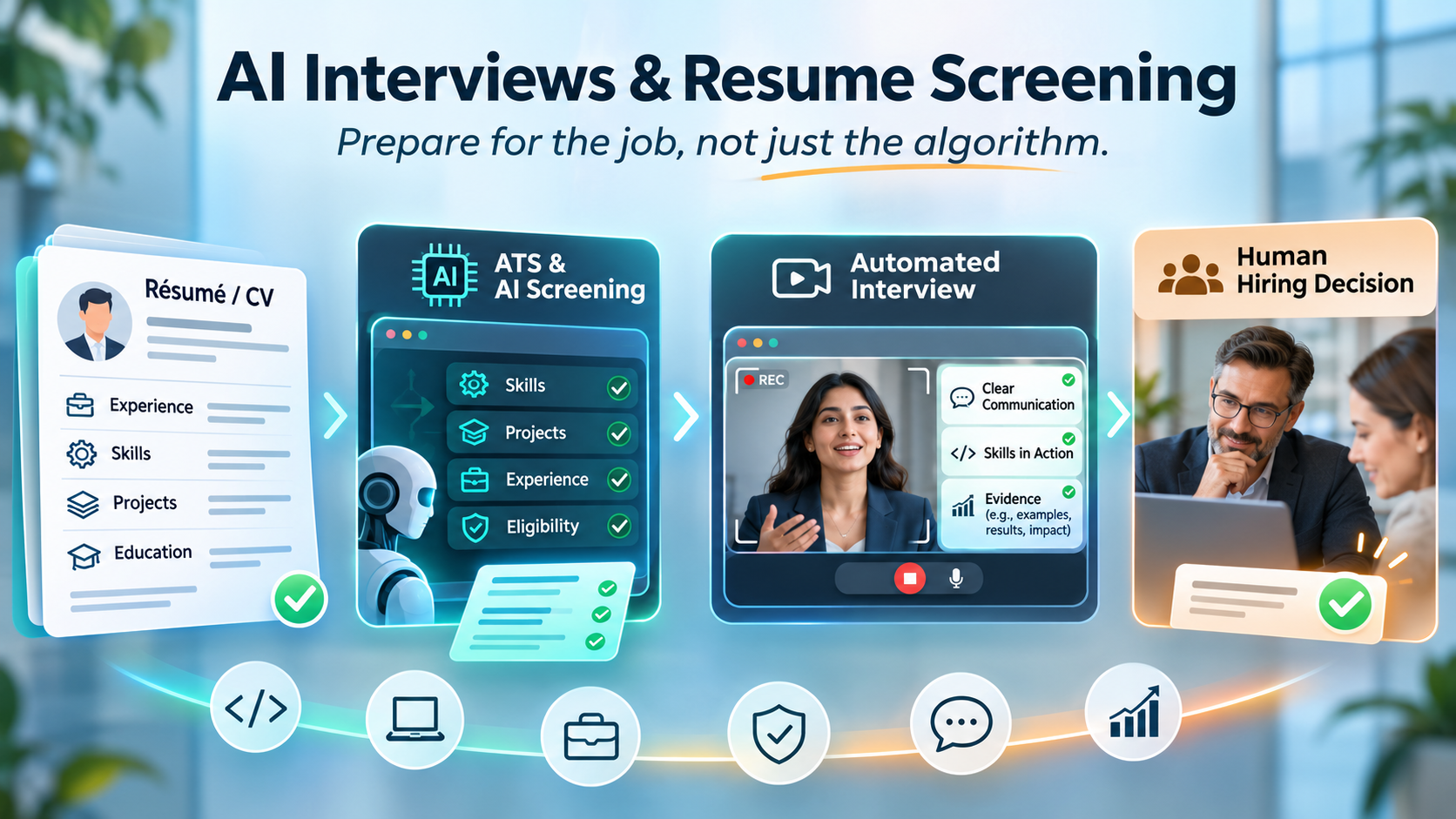
One lists programming languages and postgraduate subjects on their résumé.
The other has completed the same qualification but can also demonstrate a working application, explain its database design and discuss the challenges involved in building it.
The second candidate provides additional evidence of applied learning.
That doesn't guarantee selection.
But it helps employers evaluate practical readiness.
If you decide to pursue MCA, make your postgraduate years productive.
Build projects.
Strengthen programming fundamentals.
Learn how real software systems work.
Document your technical decisions.
The aim is not simply to add "MCA" after your name.
It is to become more capable because of the education you've completed.
So, Should You Pursue MCA After BCA?
An MCA can be a valuable next step when it develops advanced knowledge, supports postgraduate eligibility or helps you prepare for more specialised computing work.
But it isn't the only route to professional growth.
Some BCA graduates may benefit from entering employment and gaining practical experience.
Others may benefit from structured postgraduate education immediately.
Neither decision should be made simply because everyone around you is choosing the same path.
You can explore relevant postgraduate computing programmes through Digivarsity, comparing curriculum, eligibility, delivery format and recognition.
Before choosing an MCA, ask yourself:
"What will I be able to understand, develop or solve after this degree that I cannot confidently do with my current skills?"
If you can answer that clearly, you have a stronger reason to invest in postgraduate education.
Frequently Asked Questions
Is MCA necessary after BCA to get a software job?
No. Some employers recruit BCA graduates for suitable software-related roles. An MCA may provide additional technical education or meet particular eligibility requirements, depending on the employer.
Does MCA after BCA guarantee a higher salary?
No. A postgraduate degree may strengthen qualifications and capabilities, but salary depends on the role, employer, technical skills, experience and other factors.
Can I pursue MCA online after completing BCA?
Yes, where you meet the university's eligibility requirements and the specific online MCA programme is appropriately recognised or entitled for your admission session. Verify the programme through official UGC-DEB records.


Comments
Be the first to share your thoughts on this article.