You know you need to learn something new.
But what?
Do you become better at what you already do?
Or learn something completely different and move into another role?
That is essentially the difference between upskilling and reskilling.
The two words are often used together, but they solve two very different career problems.
Understanding which one you need can save you from spending months learning skills that don't actually take your career where you want it to go.
What Is Upskilling?
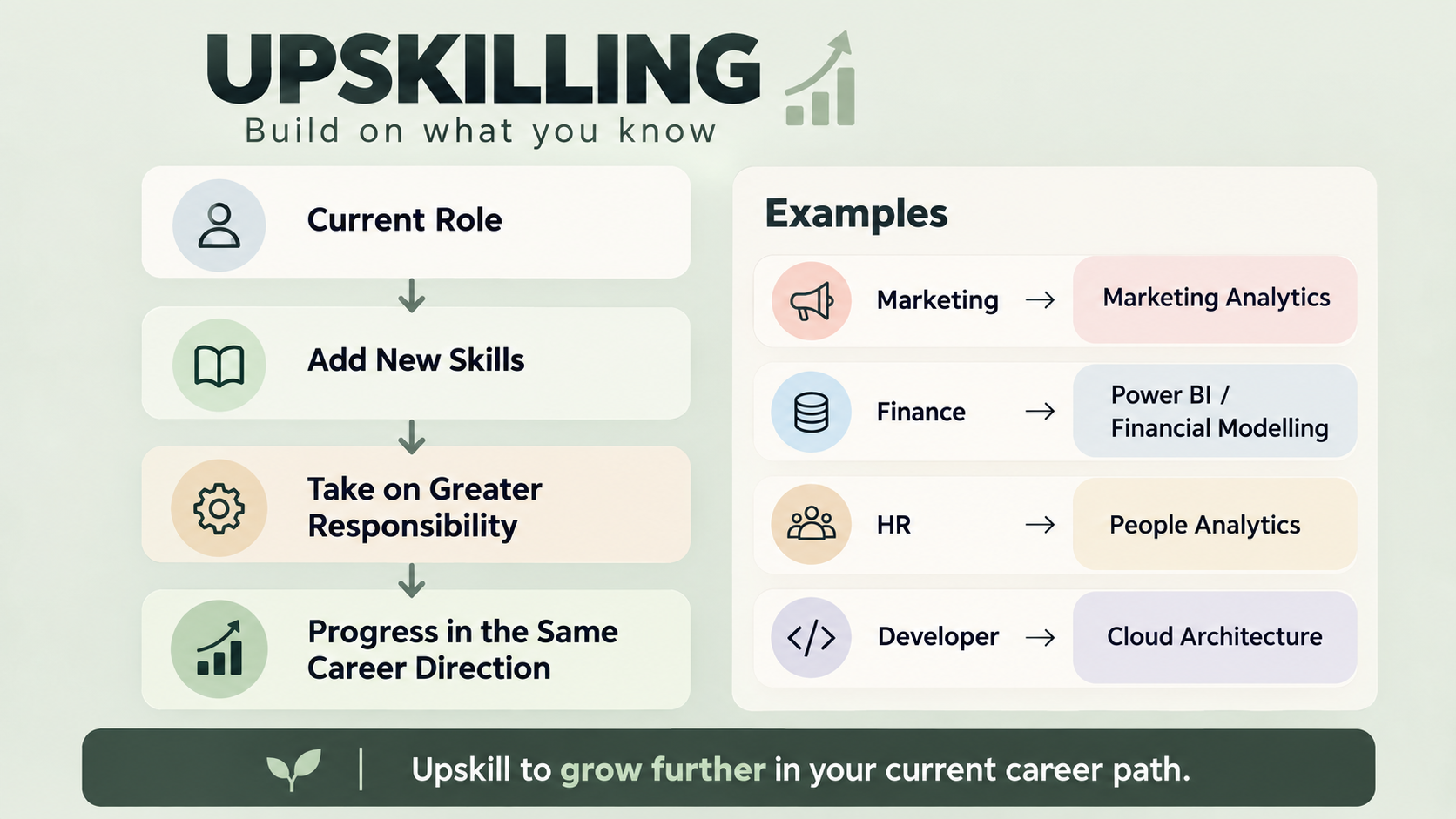
Upskilling means adding new capabilities to become better or more valuable in your current career direction.
You are not trying to become something completely different.
You're building on what you already know.
For example:
A digital marketer learning marketing analytics and AI automation is upskilling.
An accountant learning advanced Excel, Power BI or financial modelling is upskilling.
A software developer learning cloud architecture is upskilling.
An HR executive learning people analytics is upskilling.
The destination remains broadly similar.
You are upgrading how you get there.
Upskilling can help when you want to take on more responsibility, qualify for a more advanced role, adapt to new technology or become more effective at your current job.
What Is Reskilling?
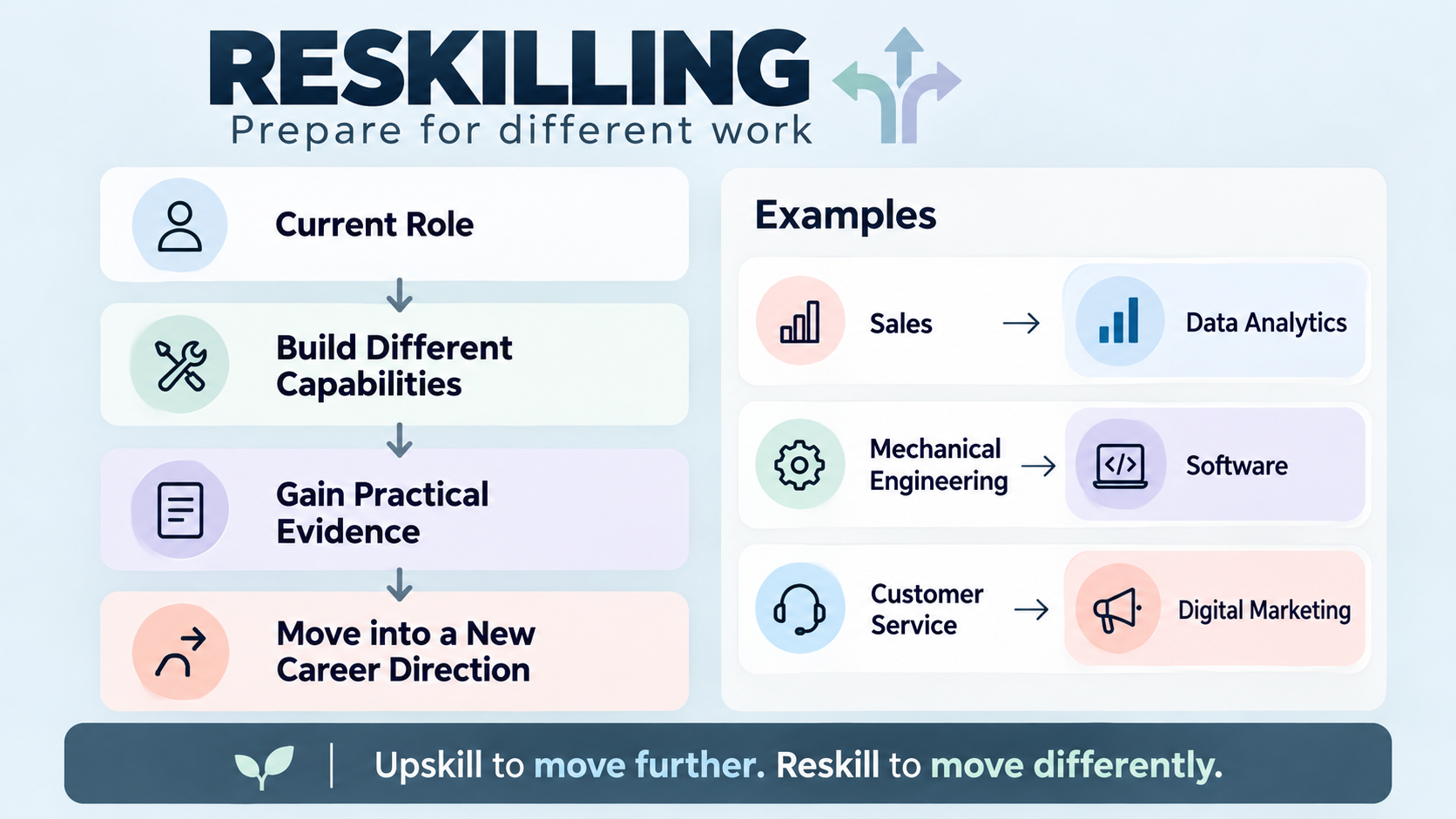
Reskilling means learning the capabilities required to move into a substantially different role or career.
Imagine a sales professional who wants to become a data analyst.
Or a mechanical engineer who wants to move into software development.
Or a customer service executive who wants to move into digital marketing.
They may have useful transferable skills, but their new roles require a different set of capabilities.
That is reskilling.
You aren't simply adding another tool to your existing toolkit.
You're preparing yourself to do different work.
So, Which One Do You Need?
Start by asking yourself why you want to learn something new.
If the answer is:
“I like my field, but I want to grow faster,”
you probably need to upskill.
If the answer is:
“I don't want to keep doing this kind of work,”
you may need to reskill.
That sounds simple, but there are a few other signs worth looking at.
You May Need to Upskill If...
You're generally happy with your career direction but feel that your abilities haven't kept pace with the job.
Maybe your industry has started using AI tools and you haven't.
Perhaps people one level above you need stronger analytics skills.
Maybe clients increasingly expect you to understand a new platform.
Or perhaps you're applying for promotions and repeatedly noticing the same missing skill in job descriptions.
Those are upskilling signals.
Your existing experience still has value. You simply need to add to it.
You May Need to Reskill If...
Reskilling becomes more relevant when the problem isn't your level.
It's your direction.
Perhaps your current role has limited opportunities.
Maybe the work has changed and you no longer enjoy it.
You might have discovered another career that suits your interests better.
Or technology may be changing your current role so significantly that you need to prepare for another kind of work.
In these situations, adding one certification may not solve the problem.
You need to understand the entry requirements of the career you want to enter and build towards them systematically.
Don't Reskill Just Because Something Is Trending
Exploring a New Career Direction?
Start by understanding what different programmes teach, the roles they can support and the learning commitment involved.
Compare Programme OptionsThis is important.
Every few months, there seems to be a new career everyone is told to move into.
Data science.
Blockchain.
Product management.
AI.
Cybersecurity.
A growing field may offer opportunities.
That doesn't automatically make it right for you.
Before committing to a major career switch, ask:
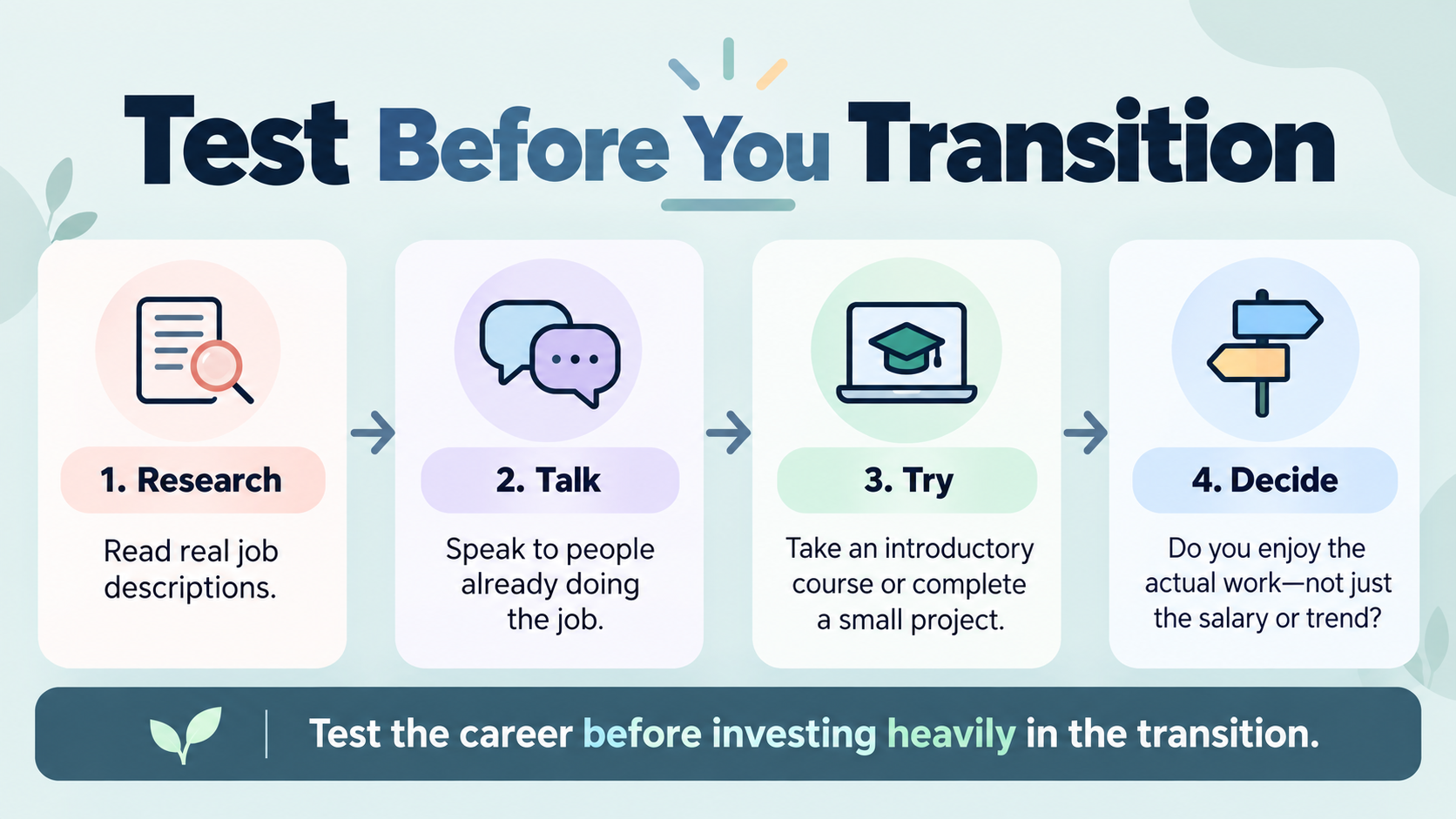
Do I actually understand what people in this job do every day?
Read job descriptions.
Talk to people working in the field.
Try a small introductory course.
Complete a project.
See whether you enjoy doing the work—not simply reading about the salary.
Reskilling is a bigger investment than upskilling. Test the direction before committing fully.
Sometimes You Need Both
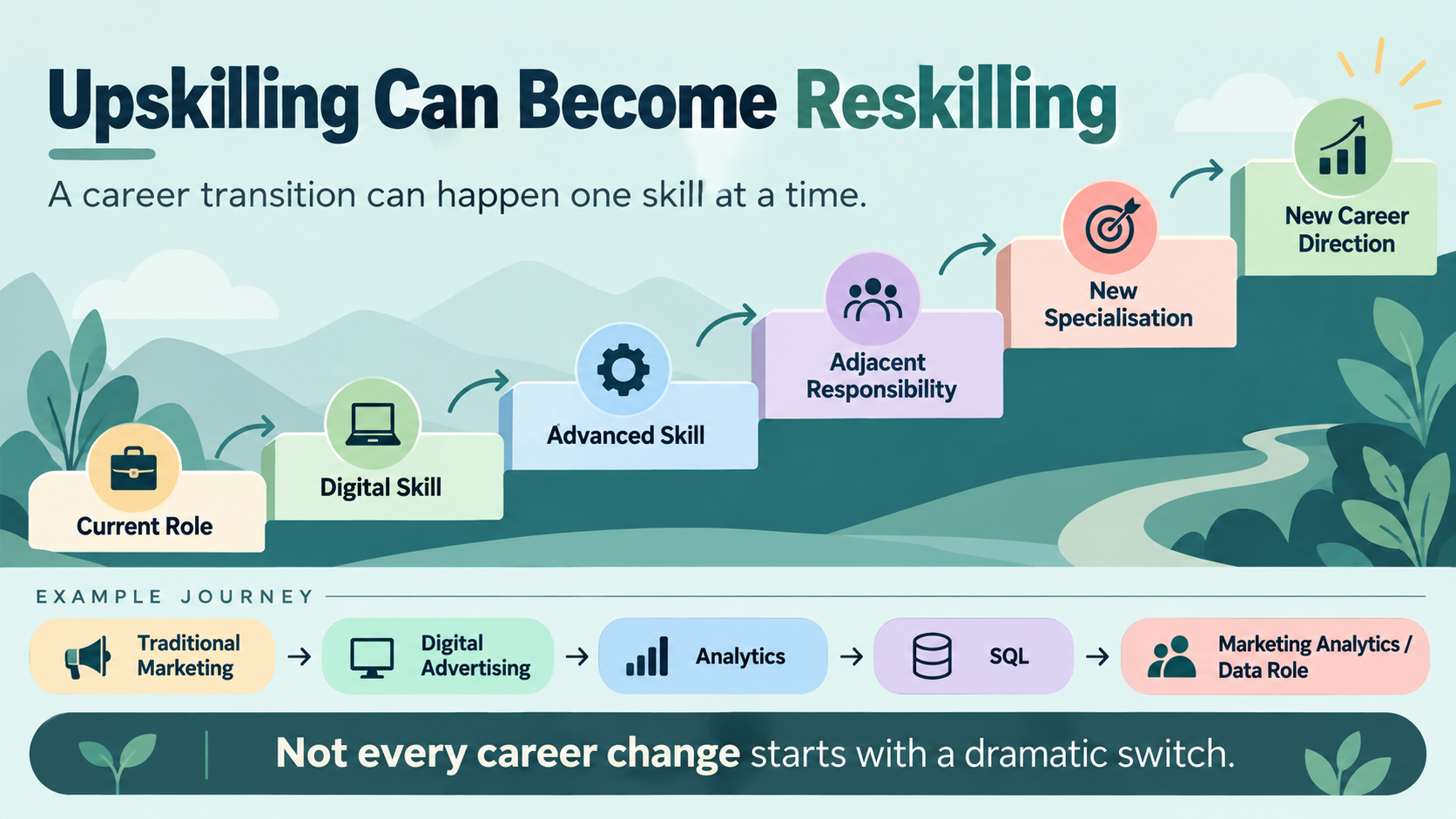
Career development isn't always this neat.
You might upskill first and eventually reskill.
Imagine someone working in traditional marketing.
They begin by learning digital advertising.
Then analytics.
Then SQL.
Over time, they discover that they enjoy working with data more than campaigns.
Eventually, they move into marketing analytics or a broader data role.
What started as upskilling gradually became reskilling.
That's completely normal.
Careers don't always change through one dramatic decision. Sometimes they change one skill at a time.
How Do You Choose What to Learn?
Don't start by browsing courses.
Start with the role.
If you want to grow in your existing career, look at job descriptions one or two levels above your current position.
What skills appear repeatedly?
Those are potential upskilling priorities.
If you're planning a career change, look at entry-level roles in the new field.
What knowledge, tools and experience do they expect?
Then divide what you need into three groups:
- Skills you already have
- Skills you can transfer
- Skills you still need to build
That gives you a much clearer learning plan than randomly collecting certifications.
Remember the Skills You Already Have
Reskilling doesn't mean throwing your previous career away.
A salesperson moving into marketing brings customer understanding and persuasion.
A teacher moving into learning and development brings communication and facilitation.
An operations professional moving into project management brings planning and coordination.
Your previous experience can become part of your advantage.
The goal is to combine it with the skills your new career requires.
Don't Learn Without Applying
Ready to Turn Your Next Skill Into Career Progress?
Explore programmes designed around different career stages, learning formats and professional goals.
Find a ProgrammeWhether you're upskilling or reskilling, one rule stays the same:
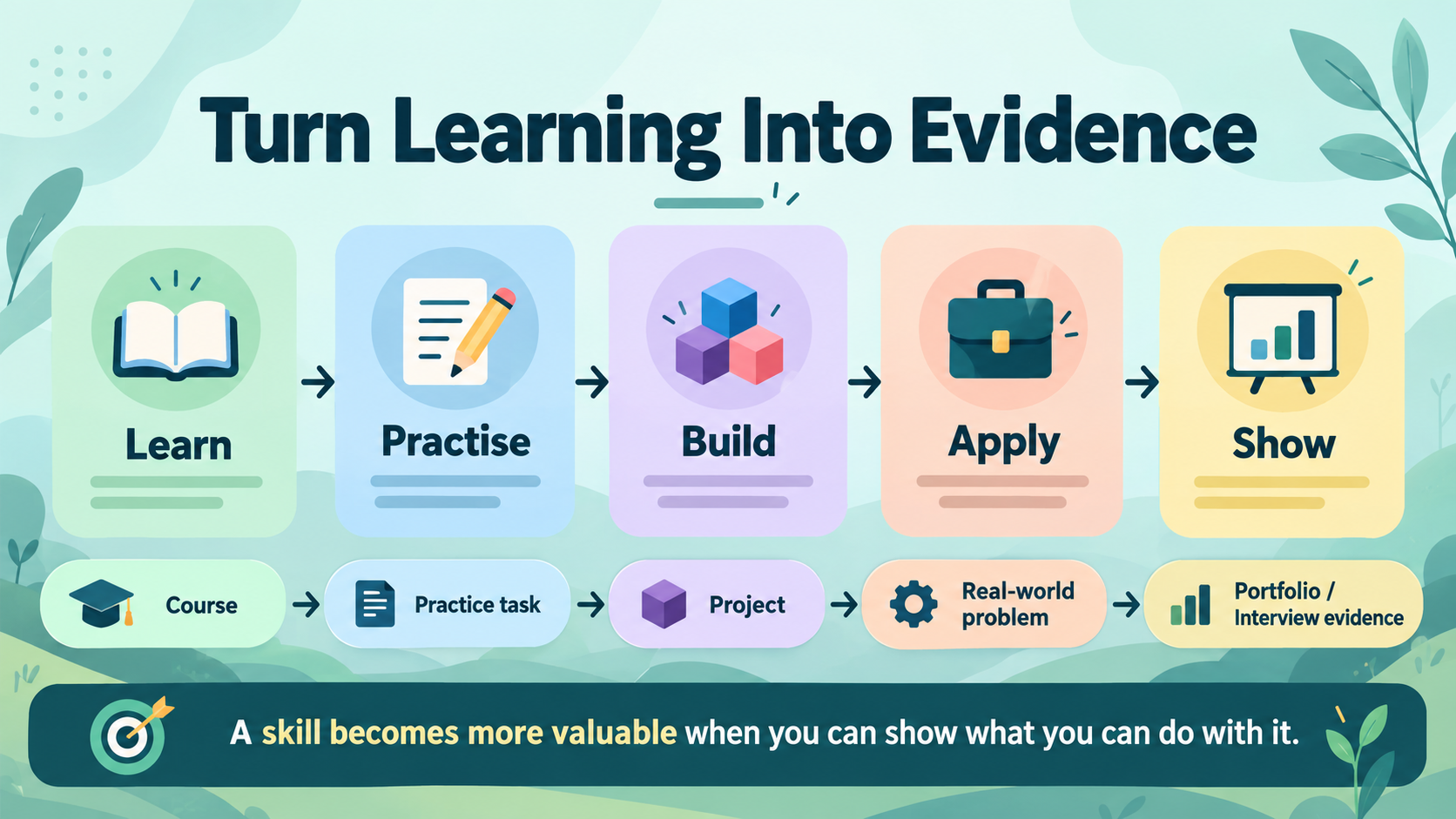
Learning needs evidence.
Build a project.
Solve a real problem.
Volunteer for a relevant assignment at work.
Freelance.
Create a portfolio.
Practise with real data.
The more you apply a new skill, the easier it becomes to explain that skill to an employer.
And that's ultimately the point.
Upskilling isn't about completing more courses.
Reskilling isn't about collecting a new set of certificates.
Both are about changing what you are capable of doing.
So ask yourself one final question:
Do I want to become better at the career I'm already building—or prepare myself for a different one?
Your answer will tell you whether it's time to upskill, reskill, or perhaps do a little of both.
Frequently Asked Questions
What is the difference between upskilling and reskilling?
Upskilling means improving or adding skills for your existing career path. Reskilling means learning new capabilities to move into a different role or profession.
When should I consider reskilling?
Reskilling may make sense if you want to change careers, your current role has limited growth opportunities or technology is significantly changing the kind of work you do.
Can I upskill and reskill at the same time?
Yes. Career transitions often begin with upskilling and gradually move towards reskilling as you develop capabilities for a different role.

Comments
Be the first to share your thoughts on this article.