
It's 7:30 in the evening.
You've finished a full day at work, travelled home and opened your laptop.
There is a lecture to watch, an assignment due this weekend and an exam that suddenly feels much closer than it did yesterday.
And all you really want to do is sleep.
Studying for a degree while working full-time is difficult.
But difficult doesn't mean impossible.
The trick isn't finding endless hours in your day.
It is building a routine that works even when you're tired, busy and occasionally completely unmotivated.
First, Stop Planning Like a Full-Time Student
This is one of the easiest mistakes to make.
A full-time student may be able to spend several hours studying on a weekday.
If you're working eight or nine hours a day, expecting the same routine from yourself isn't realistic.
Instead of asking:
“How many hours should I study every day?”
Ask:
“What are the most important things I need to complete this week?”
That shift from daily hours to weekly outcomes makes studying much easier to manage.
For example, your week might need to include:
- Two lectures
- One chapter
- An assignment
- Two hours of exam revision
Now you have something concrete to plan.
Build Your Week Before the Week Begins
Want to continue your education without putting your career on hold?
Explore flexible degree programmes designed to help you balance learning with your professional commitments.
Find a Programme That Fits My ScheduleDon't decide when to study after everything else has happened.
By then, your time will usually be gone.
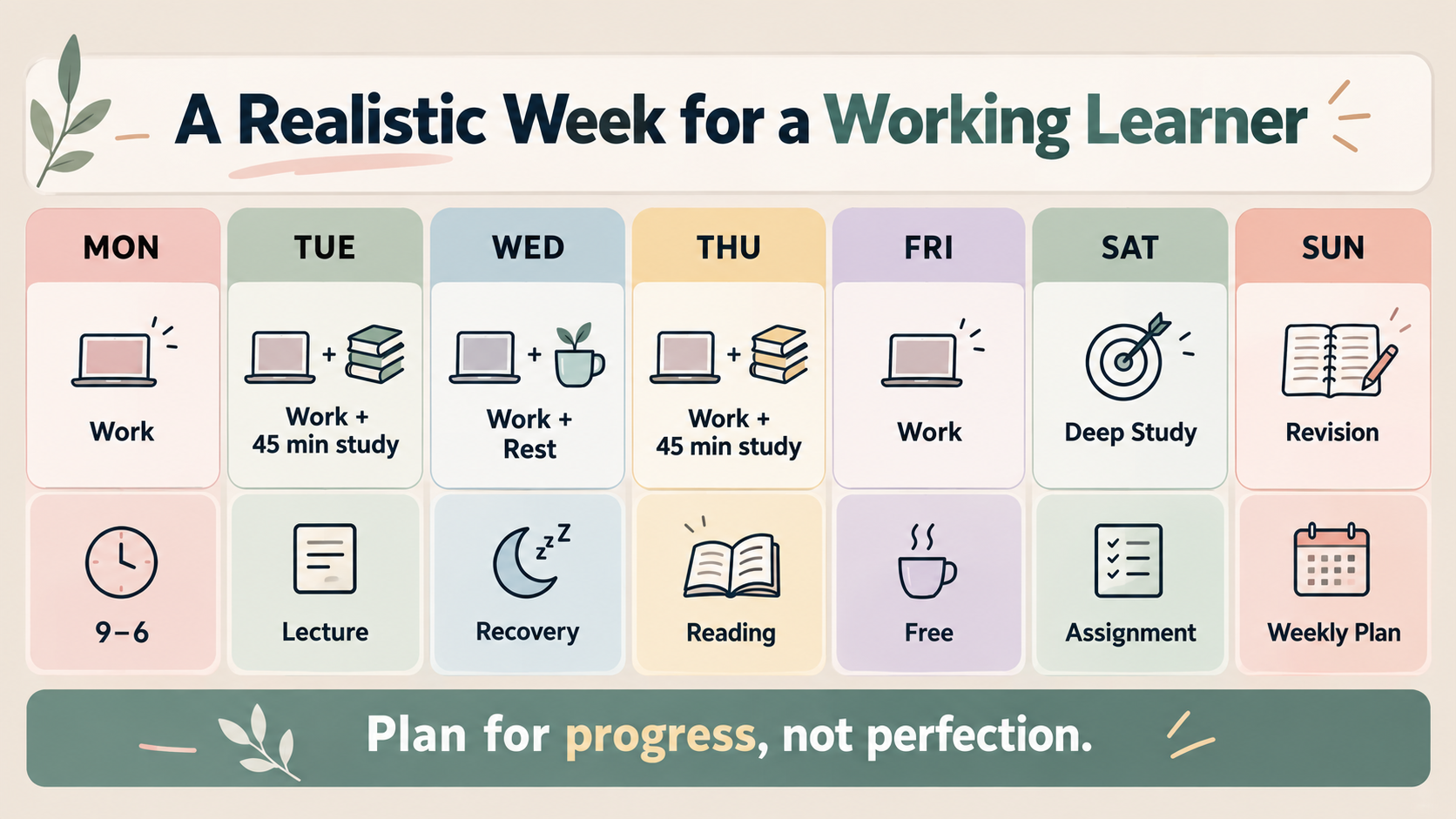
Take 15 minutes at the beginning of the week and block out your work hours, commute, personal commitments and study time.
Your schedule doesn't need to look impressive.
It needs to be realistic.
You might study for 45 minutes on Tuesday and Thursday evenings, keep Wednesday free and use Saturday morning for deeper work.
Consistency beats an ambitious timetable you abandon after three days.
And don't fill every empty space with studying.
You need buffer time because life will interrupt your plan.
Match the Task to Your Energy
Not every study task requires the same amount of concentration.
Use your highest-energy periods for difficult work.
That might mean completing an assignment or learning a complicated concept on Saturday morning rather than trying to do it at 10:30 PM after work.
Use lower-energy periods for lighter tasks such as:
- Revising notes
- Watching a recorded lecture
- Reviewing flashcards
- Organising reading material
- Listening to course content
This makes a major difference.
Time management matters. Energy management matters too.
Make Small Pockets of Time Useful
You don't always need a two-hour study session.
Twenty minutes can still be useful if you know exactly what you want to accomplish.
A commute can become revision time.
A lunch break might be enough to read five pages.
Fifteen minutes before a meeting could help you review notes.
The goal isn't to turn every free moment into study time.
That becomes exhausting very quickly.
Instead, identify a few small pockets during the week that would otherwise disappear into scrolling or waiting.
Small sessions don't replace deep study. They reduce how much deep study you need later.
Don't Just Watch. Study Actively.
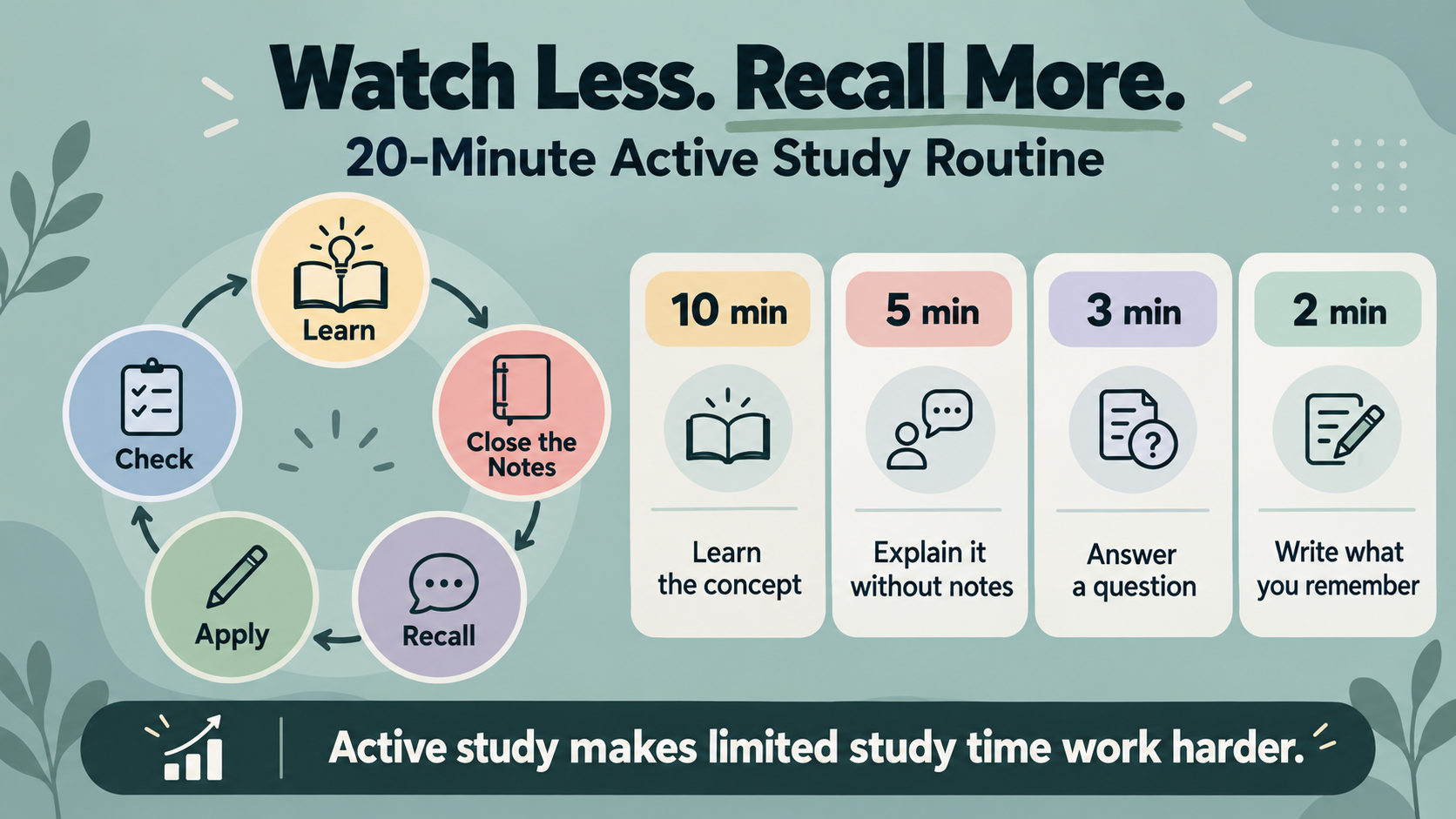
When you're short on time, how you study becomes even more important.
Watching a two-hour lecture while checking your phone isn't necessarily two hours of learning.
Try to interact with what you're studying.
After finishing a topic, close your notes and explain it to yourself.
Solve a question without looking at the answer.
Write down the three things you remember.
Apply the concept to something you see at work.
If you can explain something simply without looking at your material, there is a good chance you actually understand it.
Active learning may feel harder, but it usually saves time later.
Use Your Job as Part of Your Education
If your degree is connected to your career, your workplace can become one of your best learning environments.
Studying marketing?
Observe how your company communicates with customers.
Studying finance?
Pay attention to budgeting, reporting or business decisions.
Studying management?
Notice how teams, deadlines and conflicts are handled.
Studying data?
Look for opportunities to understand how information is collected and used.
You won't always be able to apply your course directly.
But whenever you can connect theory with something you've experienced at work, the concept becomes easier to understand—and remember.
Use AI to Save Time, Not Skip Learning
AI can be extremely useful when you're balancing work and study.
Ask it to explain a difficult concept differently.
Turn your notes into practice questions.
Use it to create a revision plan.
Ask it to quiz you before an exam.
Use it to organise ideas before starting an assignment.
But avoid handing the entire task over.
If AI does all the thinking, you may complete the assignment faster while learning much less.
Use AI as a study assistant, not as your replacement.
Protect the Basics
When deadlines pile up, sleep is often the first thing people sacrifice.
That may help for one emergency night.
It isn't a study strategy.
Working full-time while pursuing a degree is already demanding. If you regularly remove sleep, exercise, meals and breaks, the entire system eventually becomes harder to sustain.
You don't need perfect balance every day.
Some weeks will be dominated by work.
Others by exams.
Think about balance over months, not every 24 hours.
When Things Get Busy, Prioritise
There will be weeks when your plan fails.
A work deadline appears.
You get sick.
Family needs your time.
Three college deadlines arrive together.
Don't respond by trying to do everything perfectly.
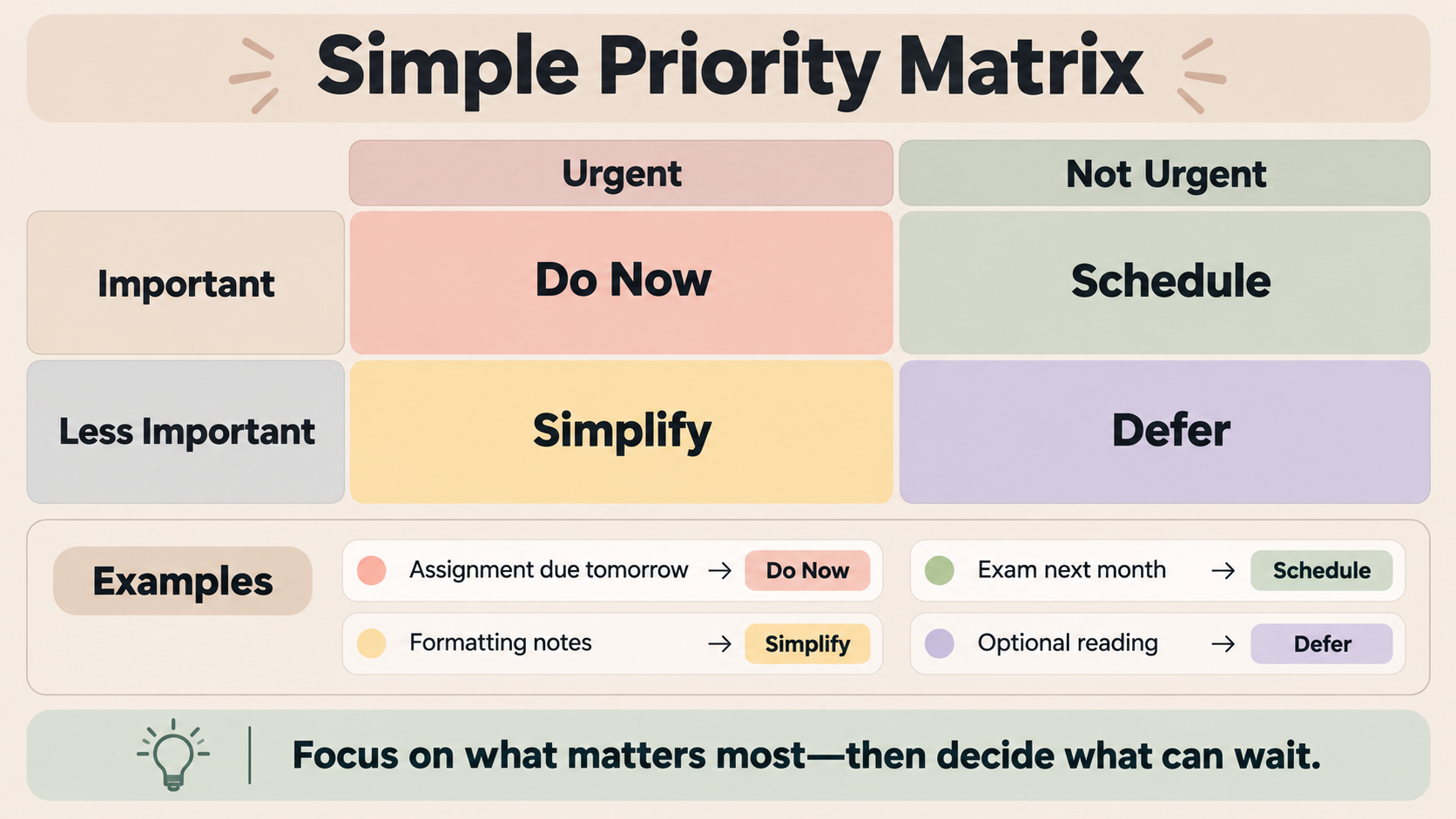
Decide what is urgent, what carries the most weight and what can wait.
Sometimes good enough and submitted is more useful than perfect and late.
Then reset your schedule.
One difficult week doesn't mean the entire plan has failed.
Work and a Degree Can Actually Strengthen Each Other
Studying while working is demanding.
But it also gives you something valuable.
You aren't only learning concepts.
You have a workplace where you can see those concepts in action.
And you aren't only gaining work experience.
You are deliberately adding knowledge that can help you understand your work better and potentially move into your next role.
So don't try to become the perfect employee and perfect student every single day.
Build a system you can sustain.
Plan weekly.
Study actively.
Use your time intelligently.
And keep moving.
A degree completed steadily alongside a career is still a degree completed.
Your Career Doesn't Have to Pause While You Study
Explore flexible programmes designed to help you continue learning while managing your professional commitments.
Explore ProgrammesFrequently Asked Questions
Is it possible to work full-time and complete a degree?
Yes. Many learners combine work and higher education successfully, especially when the programme offers flexibility and the learner follows a realistic weekly study routine.
How many hours should a working professional study each week?
There is no fixed number that works for everyone. Instead of focusing only on hours, plan around weekly outcomes such as completing lectures, assignments and revision.
How can I avoid burnout while working and studying?
Keep your schedule realistic, protect sleep and recovery time, prioritise important tasks and avoid trying to fill every free hour with study.

Comments
Be the first to share your thoughts on this article.